How to Understand the Book of Revelation Step by Step
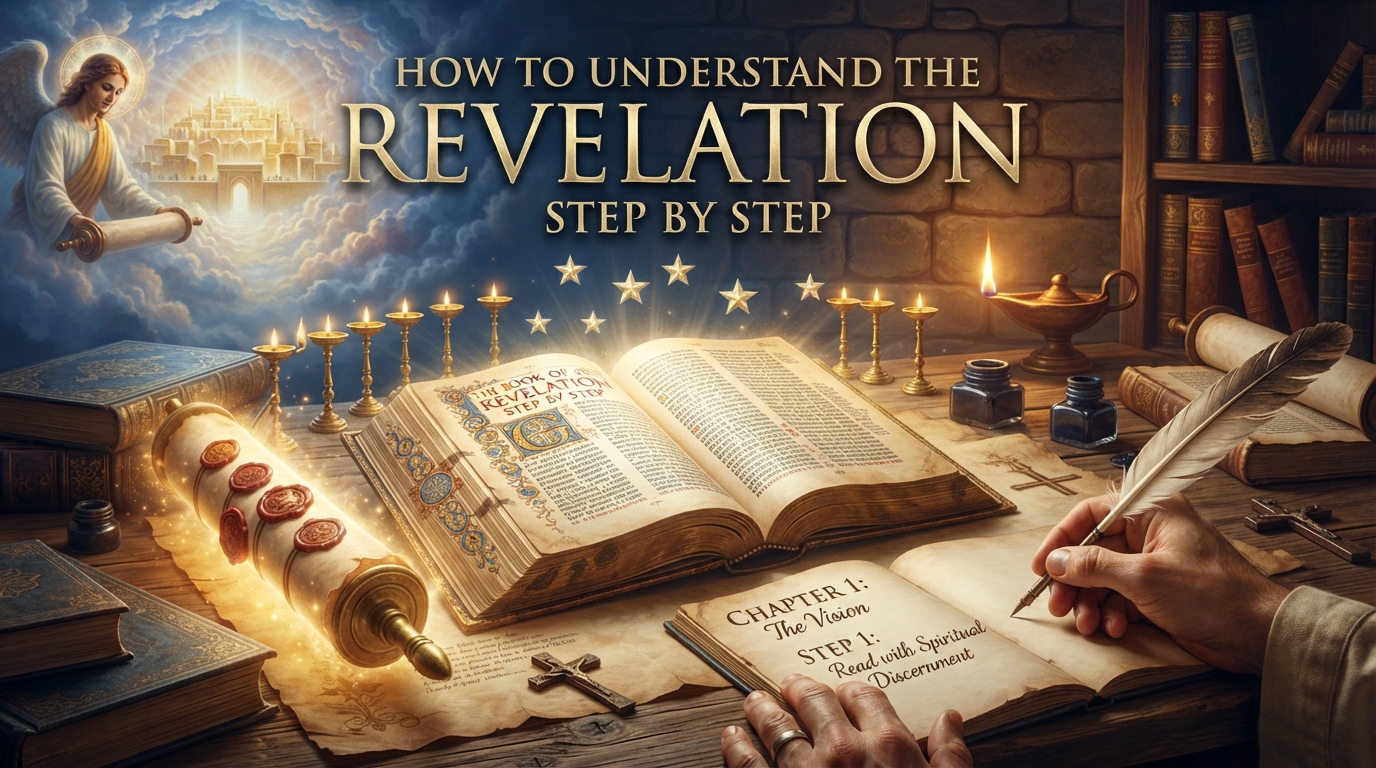
The Book of Revelation is often seen as the most confusing and intimidating book in the Bible. Many readers open it, get lost in the strange imagery of dragons, seals, and bowls, and close it feeling more confused than before.
But here is the truth: Revelation is not meant to be a mystery that only scholars can unlock. It is a letter written for everyday believers. You can learn how to understand the Book of Revelation step by step without needing a theology degree.
In this guide, I will walk you through a practical, verse-by-verse approach. We will cover the context, the key symbols, the major interpretations, and how you can apply this prophetic book to your life today. Let us start.
Why Most People Misread Revelation from the Start
The biggest mistake people make is treating Revelation like a newspaper or a cryptic puzzle for modern events. They try to match every symbol to a current headline. That approach causes confusion and fear.
Revelation is a prophetic vision written in a specific style called apocalyptic literature. It uses heavy symbolism, numbers, and visual metaphors common to Jewish prophetic writings. Think of it more like a spiritual drama than a history book.
Another common error is ignoring the original audience. John wrote to seven real churches in Asia Minor around 95 A.D. They were facing persecution, pressure to worship the Roman emperor, and fear of the future. The message had to comfort them first.
If you want to learn how to understand the Book of Revelation step by step, you must start by recognizing its genre and its first-century context. Everything else flows from there.
Step One: Read Revelation Like a Letter, Not a Riddle
Before diving into visions, begin with chapters 1 through 3. These contain John’s greeting and the messages to the seven churches. Read them slowly. Notice how Jesus introduces Himself differently to each church.
For example, to the church in Ephesus, He walks among the lampstands. To Smyrna, He is the First and the Last. Each title connects directly to the specific struggle that church faced. This is intentional.
Take a practical approach: write down the strengths and warnings for each church. Then ask yourself: does any of this sound familiar in my own faith journey? This is where the book starts to feel personal and relevant.
This foundational step teaches you one key principle: Revelation speaks to real people in real situations. The prophecy is not only about the future—it is about how you live faithfully right now.
Step Two: Understand the Heavenly Throne Room (Chapters 4–5)
Once you finish the letters, the scene shifts dramatically. John is taken up to heaven. You see a throne, a rainbow, living creatures, and a scroll sealed with seven seals. This is the control room of the universe.
Chapter 4 focuses on worship. God is described as holy, eternal, and sovereign. Chapter 5 introduces the Lamb—Jesus—as the only one worthy to open the scroll. This imagery establishes who is really in charge, no matter what happens on earth.
This section is crucial because it repositions your perspective. The chaos on earth is not the full story. Heaven has already decided the outcome. Understanding this changes how you approach the judgments and battles that follow.
When studying how to understand the Book of Revelation step by step, pause here. Meditate on the worship. Let the majesty of the throne room overshadow the fear of the tribulation.
Step Three: Decode the Seals, Trumpets, and Bowls (Chapters 6–16)
Now comes the part most readers rush through in panic. The seven seals, seven trumpets, and seven bowls of judgment. It is easy to get lost in the chaos of war, plagues, and natural disasters.
Here is a helpful framework: these judgments are not random. They follow a pattern from the Old Testament plagues of Egypt. Each cycle intensifies, but notice one important detail—God gives warnings before judgment falls.
For instance, the first four seals release the Four Horsemen. The first horseman rides on a white horse, which many interpret as conquest or the spread of the gospel. This shows that not all scholars agree on every detail, and that is okay.
A useful way to organize your study is with a simple table. This helps you see the structure clearly without feeling overwhelmed:
| Cycle | Chapters | Main Focus |
|---|---|---|
| Seven Seals | 6–8:1 | Beginning of sorrows, sealing of the 144,000 |
| Seven Trumpets | 8:2–11 | Greater judgments, warning to the earth |
| Seven Bowls | 15–16 | Final, complete wrath of God |
Remember: throughout these chapters, the saints are protected (the 144,000) and the gospel is still preached. Judgment is never God’s final word.
Step Four: Identify the Main Characters and Symbols
Revelation has a cast of symbolic characters: the Dragon (Satan), the Beast from the Sea (antichristian political power), the Beast from the Land (false prophet), and Babylon the Great (corrupt world system).
The Woman clothed with the sun (chapter 12) represents God’s faithful people, often linked to Israel. The Dragon tries to destroy her child—future king—but fails. This story reassures believers: no matter how fierce the opposition, God’s plan stands.
Numbers also carry meaning. Seven represents completeness. Twelve represents God’s people (12 tribes, 12 apostles). 666 is the number of a man, symbolizing human insufficiency and rebellion.
Here are three quick tips for interpreting symbols:
- Check the Old Testament first. Most symbols—like the lampstand, the temple, and the beasts—come from earlier books like Daniel, Ezekiel, and Zechariah.
- Let Scripture interpret Scripture. If a symbol is explained in the text (like the incense representing prayers), take that meaning directly.
- Avoid wild speculation. If a symbol is not clearly explained, stay humble. Some details are left mysterious for a reason.
For a deeper dive into biblical symbols and patterns, explore our Bible study resources.
Step Five: Understand the Three Main Interpretive Views
Christians disagree on how to timeline Revelation. But you do not need to pick a side to benefit from the book. Knowing the main views helps you read with context.
Preterism believes most of Revelation was fulfilled in the first century, especially the destruction of Jerusalem in 70 A.D. This view emphasizes the original audience’s comfort.
Futurism sees most of Revelation (chapters 4–22) as referring to a future tribulation period. This is the most popular view in modern evangelical churches.
Idealism reads Revelation as a symbolic story of the ongoing spiritual battle between good and evil. It does not map events to specific dates but focuses on timeless principles.
You can hold a primary view and still learn from the others. The key is letting the text shape your faith, not using it to predict next week’s news. If you want to compare these views in more detail, our Bible prophecy section has helpful articles.
Step Six: Apply Revelation to Your Daily Faith
After all the seals, beasts, and judgments, Revelation ends with a wedding—the marriage supper of the Lamb. The final two chapters describe a new heaven, a new earth, and God dwelling with His people.
This is the ultimate promise: evil does not win. Suffering is temporary. God restores everything. The book ends with an invitation: “Come, Lord Jesus.”
So how do you live this out today? Start with worship. Revelation is filled with songs of praise—even in the middle of tribulation. Let that be your model. When life feels chaotic, worship centers you.
Also, stay faithful in small things. The letters to the churches praise those who endure, overcome, and hold fast. Your daily obedience matters. It prepares you for bigger tests.
Finally, share the hope. The gospel is central in Revelation. An angel flies through the sky with the eternal gospel. Your testimony and kindness can be a light for someone struggling with fear about the future. For more on living this out practically, check out our Christian living guides.
Frequently Asked Questions (FAQ)
Do I need to read Revelation in one sitting?
Not at all. It is better to read it in short sections with prayer. Focus on one vision or letter per day. Let the meaning sink in before moving on.
What is the best translation for studying Revelation?
Use a translation that balances accuracy with readability, like the NIV, ESV, or NASB. Avoid paraphrases for deep study, as they may miss symbolic nuances.
Is Revelation only about the future?
No. It speaks to first-century believers, to all Christians throughout history, and to future events. It is a layered book with multiple applications.
How do I handle scary or violent passages?
Remember that Revelation shows God’s justice in response to persistent evil. But it also shows His mercy—every judgment is preceded by a warning. Focus on the Lamb who was slain.
What does the number 666 mean?
It is the number of “a man” (Revelation 13:18). It symbolizes human rebellion and imperfection. Many scholars see it as a contrast to the perfect number 7.
Can I skip the seven letters to the churches?
You can, but it is not recommended. Those letters establish the personal and practical tone of the whole book. They are essential for learning how to understand the Book of Revelation step by step.
How long will it take to study Revelation thoroughly?
If you follow a structured plan, you can cover it in 8 to 12 weeks. The goal is depth, not speed. Many people find that a slow study transforms their prayer life and their view of God.
Conclusion
The Book of Revelation is not a frightful puzzle—it is a powerful revelation of Jesus Christ. The title itself means “unveiling.” God wants you to understand it, not hide from it.
By following these steps—reading as a letter, grounding yourself in the throne room, decoding the judgments, identifying the symbols, comparing the views, and applying the hope—you can confidently navigate this prophetic book.
Do not be afraid to take your time. Ask the Holy Spirit for guidance. Discuss it with your church or small group. Revelation was written to bless those who read and keep its words.
If you want to strengthen your spiritual foundation as you study prophecy, you might also benefit from resources that support mental clarity and focus. For example, The Genius Wave is designed to support a sharper, healthier mind—helpful when engaging with complex biblical texts. But remember: the real key is consistent prayer and humble study.
Start today. Open the book. Read it not with fear, but with expectation. The One who sits on the throne is worthy. And He is coming soon.