The Truth About the Four Horsemen of the Apocalypse
When people hear the phrase “Four Horsemen of the Apocalypse,” most picture galloping riders bringing destruction and doom. But there’s so much more to this Bible prophecy than pop culture suggests. These four figures come straight from the Book of Revelation, chapter 6, and they reveal a powerful message about judgment, hope, and the ultimate plan for humanity. Let’s dive into what the Bible actually says, why it matters for today, and how it connects to your faith journey.
1. What the Book of Revelation Really Says About the Four Horsemen
Let’s start where it all begins—Revelation 6:1-8. The apostle John describes a vision of a scroll sealed with seven seals. As the Lamb (Jesus) breaks the first four seals, four distinct horses and riders appear. Each one is summoned by one of the four living creatures around God’s throne. This isn’t a random event; it’s a carefully structured prophetic vision that unfolds in a specific order.
Understanding the context is crucial. These seals are part of a larger narrative about judgment and redemption. They don’t exist in isolation. They are a preview of what will happen during the tribulation period, a time of intense turmoil before the return of Christ. Many scholars see these horsemen as representing different aspects of divine judgment allowed by God.
This is a key point: the horsemen are not independent agents of evil. They serve under God’s sovereign authority. They ride out with a purpose, and that purpose is tied to the bigger story of salvation and justice. If you want to explore the full context of these prophecies, check out our articles on Bible prophecy and end times for deeper insights.
2. The First Horseman: The White Horse and the Conqueror
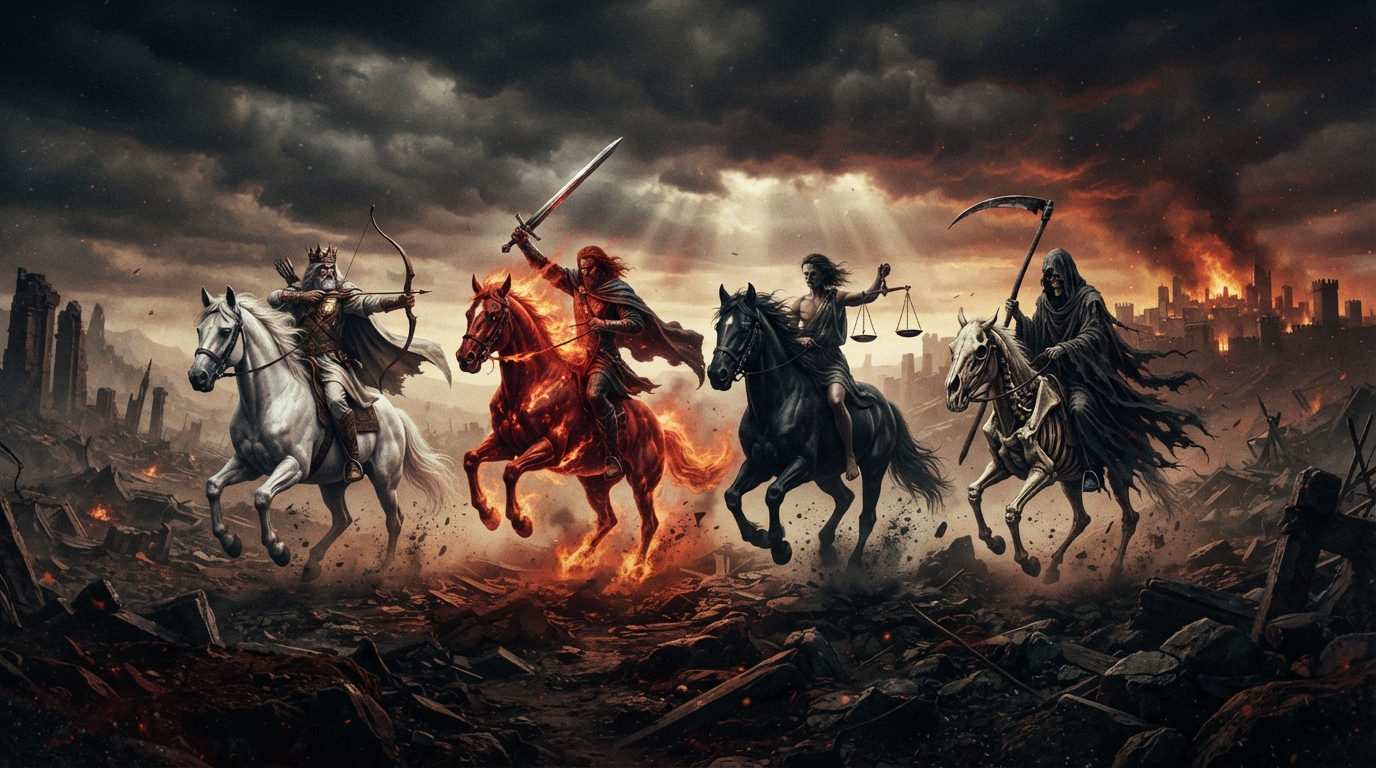
The first rider appears on a white horse. He carries a bow and is given a crown. He rides out “conquering and to conquer.” This image is often misunderstood. Many think it represents Jesus or the Antichrist. But reading the text carefully shows something different. The Greek word used here (nikon) implies a victory that is not yet complete—it’s a conquest in progress.
This first seal represents a false peace or a deceptive conquest. The bow without arrows suggests a victory achieved through treaty or deception, not direct warfare. It’s a picture of a leader who promises peace but brings destruction. This sets the stage for the next three horsemen, who escalate the chaos.
Historically, some interpret this as the rise of the Antichrist. Others see it as a symbol of human ambition and imperialism. What’s clear is that this rider is not the same as Jesus on a white horse in Revelation 19. That rider has many crowns and a sword coming from his mouth. The first horseman has one crown and a bow. The difference matters for understanding prophecy correctly.
3. The Second Horseman: Red Horse and War
The second seal brings a fiery red horse. The rider is given a great sword and the power to take peace from the earth. This horseman represents war on a massive scale. The color red is symbolic of bloodshed and violence. This is not just any conflict—it’s the kind of war that breaks out when the false peace of the first seal collapses.
Think about it: a leader promises peace, but then war erupts. That’s exactly what happens in many prophetic timelines. The sword given to this rider is large, suggesting worldwide conflict, not a small skirmish. It’s a sobering reminder that human efforts at peace without God’s righteousness will eventually fail.
This ties directly into current events. Many people see rising tensions between nations as potential signs of the end times. While we must be careful not to date-set, the pattern described here feels remarkably relevant. For more on how to approach these signs with wisdom, read our Christian living resources for practical guidance.
4. The Third Horseman: Black Horse and Famine
The third seal features a black horse. The rider holds a pair of scales or a balance. A voice from among the four living creatures says, “A quart of wheat for a denarius, and three quarts of barley for a denarius, but do not harm the oil and the wine.” This is a picture of extreme economic hardship and famine.
A denarius was a day’s wage. A quart of wheat would barely feed one person for a day. Under normal conditions, you could buy much more. This scale symbolizes scarcity—basic necessities become luxuries. The rich might still have oil and wine, but the common people struggle to survive. It’s a picture of economic injustice and famine caused by war and poor leadership.
This horsemen reminds us that judgment often comes through natural consequences of human sin. War leads to famine. Poor governance leads to suffering. The black horse is a call to recognize that our choices have real, sometimes devastating effects. It also points to the ultimate hope that God will one day provide for His people completely.
5. The Fourth Horseman: Pale Horse and Death
The fourth and final horseman is called Death, and Hades follows close behind. He rides a pale horse (the Greek word chloros suggests a greenish-yellow, corpse-like color). He is given authority over a fourth of the earth to kill by sword, famine, plague, and wild beasts. This is the culmination of the previous three judgments.
This rider doesn’t need a weapon. He is the consequence of all that came before. War and famine lead to disease and death. The mention of “wild beasts” might sound strange, but it suggests a breakdown of order in creation itself. When humanity turns away from God, even nature becomes hostile.
The fact that this is limited to “a fourth of the earth” is important. It shows that judgment is measured and purposeful. God is not random or excessive. He allows consequences, but He also sets boundaries. This is a theme throughout Scripture: God’s judgment is always just and always accompanied by mercy. Understanding this helps us see the Bible study perspective on God’s character.
6. How the Four Horsemen Connect to End Times Signs Today
Many believers wonder if we are living in the times described in Revelation. While no one knows the exact day or hour (Matthew 24:36), the pattern is familiar. Wars, rumors of wars, famines, pestilences, and economic instability are global news headlines. Jesus Himself said these would be “the beginning of birth pains” (Matthew 24:8).
But here’s the twist: the Four Horsemen are not the final word. They are the beginning of the seals, not the end. After the seventh seal, we see a pause in heaven, and then a new series of judgments begins. The ultimate message is not despair but hope. God is in control, and He is working all things toward a final restoration.
Here are some practical ways to respond to these prophecies with faith instead of fear:
- Stay grounded in Scripture. Know what the Bible actually says, not just what you see on social media.
- Live with readiness. Keep your faith active through prayer, worship, and serving others.
- Share hope. The end times message is ultimately about salvation, not just judgment.
- Seek community. Connect with other believers who study prophecy responsibly.
For a deeper dive into how to maintain hope in uncertain times, explore our faith and inspiration section.
7. A Simple Comparison of the Four Horsemen
To help you see the differences clearly, here’s a quick table summarizing each horseman:
| Seal | Horse Color | Symbolism | Key Detail |
|---|---|---|---|
| 1st | White | False Conquest / Deceptive Peace | Carries a bow, given a crown |
| 2nd | Red | War and Violence | Given a great sword |
| 3rd | Black | Famine and Economic Hardship | Holds a pair of scales |
| 4th | Pale | Death and Hades | Authority over 1/4 of the earth |
FAQ: Common Questions About the Four Horsemen of the Apocalypse
Are the Four Horsemen angels or demons?
They are not specifically identified as either. They are symbolic beings that carry out God’s purposes. The Bible doesn’t give them names or individual identities. They serve as visual representations of judgment.
Is the first horseman Jesus?
No. While Jesus appears on a white horse in Revelation 19, the first horseman has key differences: one crown (not many), a bow (not a sword from his mouth), and a limited conquest. The context points to a false messiah or conqueror.
Do the Four Horsemen represent specific future events?
Most evangelical scholars see them as describing general trends during the tribulation period, not single historical events. They represent patterns of judgment that will intensify before Christ’s return.
Are we currently under the seals of Revelation?
Theologians disagree. Some believe the seals began with the ascension of Christ. Others see them as strictly future events during the tribulation. What is certain is that these patterns exist throughout history, but will culminate in the end times.
Why are there only four horsemen if there are seven seals?
The first four seals form a distinct group—they are introduced in a similar way and describe judgments on humanity at large. The fifth seal shows the souls of martyrs, and the sixth and seventh deal with cosmic disturbances and final judgment.
What does “pale horse” mean in Greek?
The Greek word is chloros, which means pale green or yellowish, like a corpse. It literally suggests a sickly, death-like color. It’s unique to this horseman and emphasizes the reality of mortality.
Can the Four Horsemen be stopped?
From a biblical perspective, these judgments are part of God’s sovereign plan. They cannot be stopped by human effort. However, believers are called to pray for peace, share the gospel, and trust in God’s ultimate deliverance.
Conclusion: Hope Beyond the Horsemen
The Four Horsemen of the Apocalypse are not meant to terrify us into hiding. They are a wake-up call. They remind us that the world is broken and needs a Savior. They point to the reality that sin has consequences, but God’s love is stronger than any judgment.
As you study these prophecies, remember the full gospel. The same Bible that describes the horsemen also promises a new heaven and a new earth where there will be no more death, mourning, crying, or pain (Revelation 21:4). That’s the real end of the story—and it’s beautiful. If you want to explore how to stay focused on God’s promises through prayer, visit our prayer and devotion section for practical tools.
For those seeking clarity of mind and sharp focus during Bible study, some readers have found that brain-supporting audio tools help with concentration. You can check out The Genius Wave to support a sharper, healthier mind while digging into Scripture. But always remember: the ultimate source of wisdom is God’s Word itself.
Keep your eyes on Jesus. He is the one who holds the scroll. He is the one who breaks the seals. And He is the one who will return to make all things new. That’s the truth worth holding onto.