How Current Events Compare to Biblical Predictions
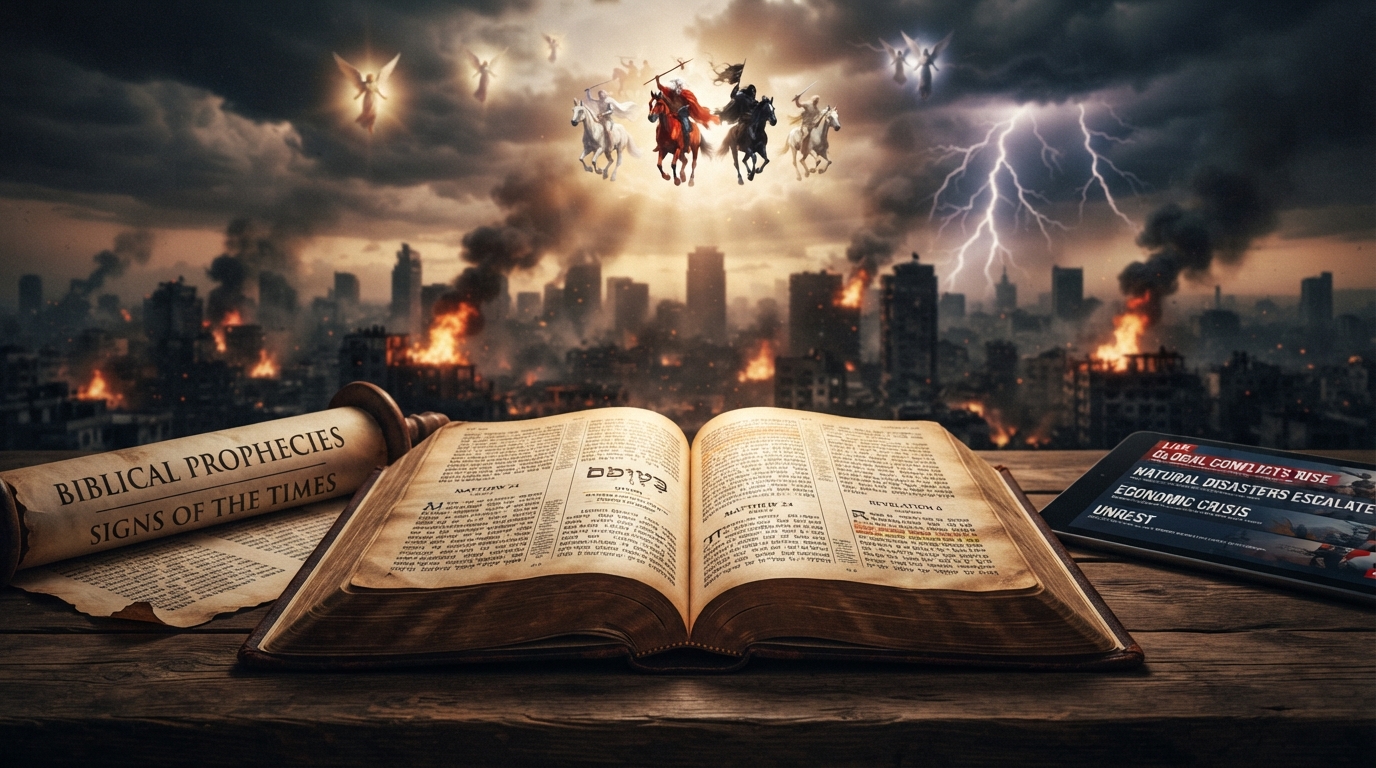
Every news cycle brings fresh headlines—wars in the Middle East, political unrest, moral shifts, and natural disasters. For many believers, these stories stir a familiar question: are we seeing the exact scenarios the Bible described thousands of years ago?
This isn’t about sensationalism. It’s about honest reflection. From the fig tree prophecy to the description of the last days, Scripture offers a lens that makes current events more than just random chaos. They become signals—not of doom, but of divine timing.
In this article, we’ll walk through seven key areas where modern headlines align with biblical passages. Whether you’re a seasoned student of prophecy or just starting to connect the dots, this guide will give you a clearer picture of how current events compared to biblical predictions can actually strengthen your faith.
1. Wars and Rumors of Wars: A Biblical Constant
Jesus Himself warned in Matthew 24:6: “You will hear of wars and rumors of wars, but see to it that you are not alarmed. Such things must happen, but the end is still to come.” Today, conflicts in Ukraine, Gaza, and Sudan dominate the news. These aren’t isolated incidents—they’re part of a pattern Jesus described.
What stands out is the scale and global awareness. In ancient times, local conflicts stayed local. Now, 24/7 media brings every skirmish into your living room. This hypervisibility makes the prophecy feel more immediate and personal.
Yet Jesus’ instruction remains: don’t be alarmed. Recognizing these events as predicted helps you stay calm, not panicked. It’s a reminder that God is sovereign over history, not surprised by it.
2. Natural Disasters in Unprecedented Frequency
Luke 21:11 mentions “great earthquakes, famines and pestilences” as signs of the times. While natural disasters have always existed, their frequency and intensity have spiked in recent decades. Scientists point to climate change, but believers also see a prophetic dimension.
Consider the 2023 earthquakes in Turkey and Syria, or the record-breaking wildfires in Canada. These aren’t proof that the end is tomorrow, but they align with the “birth pains” Jesus described in Matthew 24:8. The metaphor is intentional—birth pains increase in frequency and intensity before delivery.
If you’re looking for a resource to deepen your understanding of these signs, check out our Bible study section for verse-by-verse breakdowns of prophetic passages.
| Type of Disaster | Biblical Reference | Modern Example (2023–2025) |
|---|---|---|
| Earthquakes | Luke 21:11 | Turkey-Syria quake (2023) |
| Famines | Matthew 24:7 | Horn of Africa drought |
| Pestilences | Revelation 6:8 | COVID-19 pandemic aftermath |
| Wildfires/Storms | Revelation 8:7 | Canadian wildfires (2023–2024) |
3. The Moral Shift: Calling Evil Good
Isaiah 5:20 gives a chilling prophecy: “Woe to those who call evil good and good evil.” Look around today. Cultural norms have inverted biblical morality on issues like sexuality, truth, and justice. What was once universally considered wrong is now celebrated.
This isn’t about judging individuals—it’s about recognizing a systemic shift. 2 Timothy 3:1–5 describes people as “lovers of themselves, lovers of money, boastful, proud, abusive… having a form of godliness but denying its power.” That list reads like a modern news headline.
How do you navigate this without losing hope? That’s where Christian living content can help you stay grounded in truth while extending grace to others.
4. The Fig Tree Generation: Israel’s Return
One of the most concrete prophecies is the fig tree in Matthew 24:32–34. Most scholars agree the fig tree represents Israel. After nearly 2,000 years of exile, Israel became a nation again in 1948—a single generation ago. Jesus said this generation would not pass away until all is fulfilled.
Today, Jerusalem is a flashpoint. Nations surround Israel with threats of annihilation. The Bible predicted this exact scenario in Zechariah 12:2–3, calling Jerusalem a “cup of drunkenness” to all nations. Watching the news from the Middle East, it’s hard to miss the parallel.
This topic is deeply connected to Bible prophecy and end times studies, where you can explore the timeline of these events in greater depth.
5. The Rise of Global Governance and Surveillance
Revelation 13 describes a system where no one can buy or sell without the “mark of the beast.” While we’re not there yet, the technological infrastructure is rapidly forming. Digital currencies, biometric IDs, and microchip implants are becoming mainstream.
What’s interesting is the speed. In 2020, digital payments surged by over 30% globally. Central bank digital currencies (CBDCs) are being tested in over 100 countries. The capability for a global cashless system now exists—something unthinkable even 20 years ago.
Keep your spirit sharp. Don’t fall into fear, but stay aware. If you want to keep your mind clear and focused during these times, confira esta opção para apoiar uma mente mais afiada e saudável—it’s a practical tool for mental clarity as you study prophecy.
6. Increase in Knowledge and Travel
Daniel 12:4 says that in the end times, “many will go here and there to increase knowledge.” Before the internet, this was a cryptic verse. Now it’s obvious. Information moves at the speed of light. Global travel has connected every corner of the planet.
Think about it: the Gospel has now reached virtually every people group. The Bible says the end will come when the Gospel is preached to all nations (Matthew 24:14). Missionaries today use drones, smartphones, and translation apps to reach remote tribes. The knowledge of God is spreading faster than ever.
This isn’t just a prophecy—it’s a call to action. Use this moment to deepen your own faith. Our prayer and devotion resources can help you stay consistent in seeking God as world events unfold.
7. Global Deception and False Teachers
Jesus and Paul both warned about deception. “Many false prophets will arise and will deceive many” (Matthew 24:11). Social media has amplified this. You can find a “prophet” claiming divine revelation for every political candidate or natural disaster.
The danger isn’t just obvious cults—it’s subtle deception within mainstream Christianity. Teachings that water down sin, overemphasize prosperity, or dismiss prophecy altogether are forms of false doctrine. The Bible says even the elect could be deceived if that were possible.
Discernment is not optional; it’s mandatory. Check everything against Scripture, not feelings. For encouragement in staying true to biblical truth, visit faith and inspiration for testimonies of believers standing firm.
Frequently Asked Questions
1. Are current events really fulfilling Bible prophecy, or is it just coincidence?
While not every event is prophetic, the accumulation and alignment of specific signs—Israel’s rebirth, global moral shifts, and technological infrastructure—match biblical predictions with remarkable precision. The Bible itself warns against setting dates, but encourages watching the signs.
2. How can I tell if a news event is a genuine prophecy fulfillment?
Compare it directly to Scripture. Look for multiple corroborating passages, not just one isolated verse. Avoid sensationalists who claim every earthquake is the end. True prophecy interpretation is sober and rooted in context.
3. What is the most convincing modern prophecy being fulfilled?
The fig tree generation (Israel becoming a nation) remains the most concrete. It’s a visible, historical event that Jesus directly connected to the end times timeline. No other interpretation fits as cleanly.
4. Does Bible prophecy mean the world will end soon?
“Soon” is relative. 2 Peter 3:8 says a thousand years is like a day to God. What’s important is readiness, not calculation. Live each day with purpose, love, and watchfulness—not fear.
5. Can non-Christians understand these parallels?
Absolutely. Many historians and journalists have noted the eerie accuracy of biblical predictions. While they may not accept the theological implications, the correlations are undeniable to an honest observer.
6. How should I respond to people who mock prophecy believers?
With grace and truth. 2 Peter 3:3–4 predicted mockers would come. Don’t argue aggressively; simply share what you see with humility. Let your peace and hope speak louder than your predictions.
7. Should I prepare physically for end times, or just spiritually?
Both are wise. Biblical examples like Joseph storing grain show practical preparation is not unspiritual. However, spiritual readiness—faith, prayer, and love—is your eternal foundation. Don’t let physical prep become an idol.
8. Where can I learn more about specific prophecies?
Dive into our Bible prophecy and end times section for curated articles that break down each prophecy in plain language.
Conclusion
Comparing current events to biblical predictions isn’t about fear-mongering. It’s about waking up. Jesus said, “When you see all these things, know that it is near—at the very doors” (Matthew 24:33).
We have more information, more connectivity, and more fulfillment of prophecy than any generation before us. That’s not a curse—it’s a privilege. You get to live in the days the prophets longed to see.
Stay rooted in Scripture. Stay connected to a community of believers. And let the headlines drive you closer to God, not away from Him. The story isn’t over—and for those who trust in Christ, the ending is glorious.