7 Common Misunderstandings About the End Times
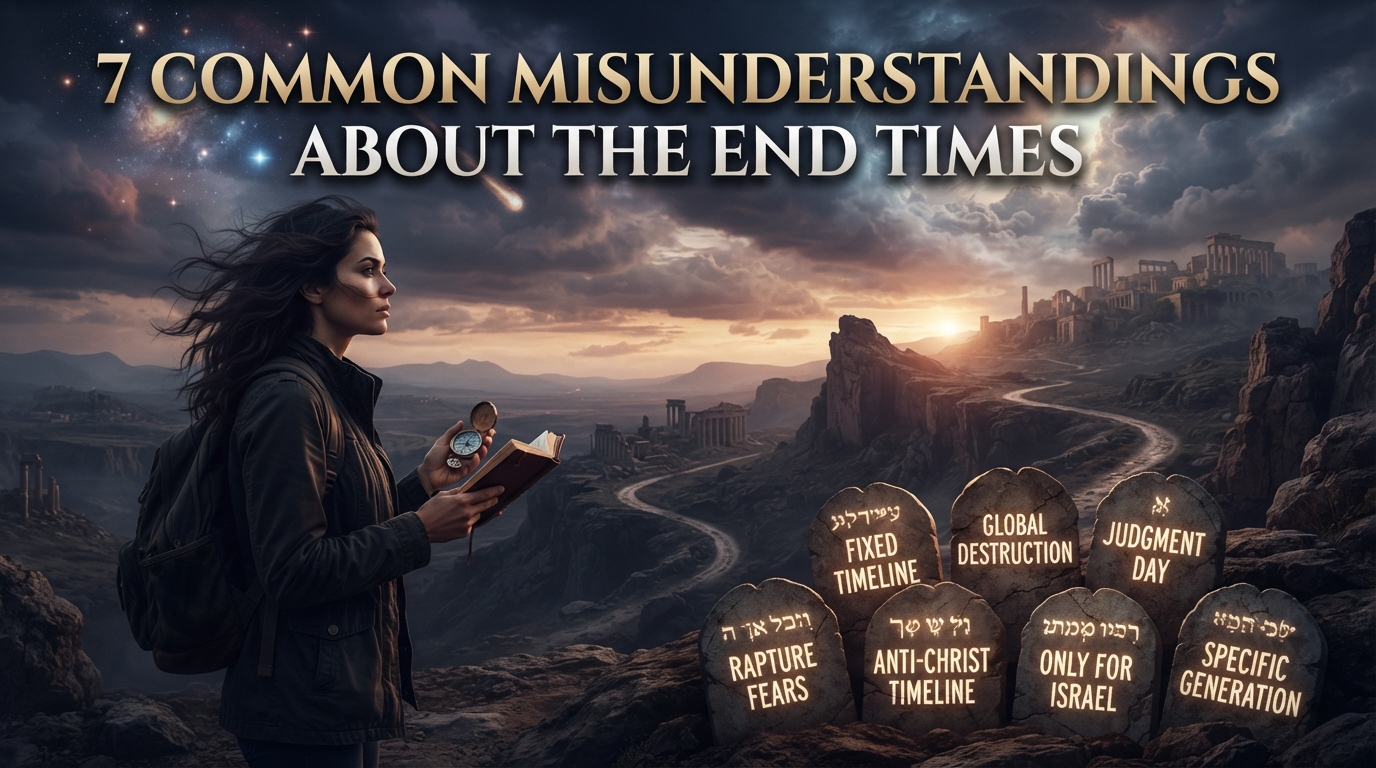
Let’s be honest: the End Times can feel confusing, even overwhelming. Between popular movies, internet speculation, and well-meaning but misinterpreted sermons, many of us have picked up ideas about the last days that simply aren’t in the Bible. If you’ve ever wondered whether everything you’ve heard is accurate, you’re not alone.
In this article, we’ll unpack seven common misunderstandings about the End Times. My goal is to offer a clear, Scripture-based perspective—free from fear-mongering or sensationalism. Whether you’re a longtime student of Bible prophecy or just starting to explore, this guide will help you separate cultural noise from biblical truth.
1. The “Left Behind” View Is the Only Interpretation
Thanks to blockbuster novels and films, many people assume a pre-tribulation Rapture is the only biblical position. But Christian scholars have debated the timing of the Rapture for centuries. The pre-tribulation, mid-tribulation, and post-tribulation views all have thoughtful advocates.
The key is to recognize that the Bible doesn’t explicitly outline a timeline. Jesus said, “But about that day or hour no one knows” (Matthew 24:36). That humility should shape how we approach the subject. If you want to go deeper on interpreting prophetic passages, explore our Bible study resources for practical guidance.
2. Revelation Is a Secret Code for Current Events
Every few years, someone claims Revelation predicts a specific modern leader, war, or natural disaster. But John wrote Revelation to first-century Christians facing persecution. While it contains future prophecy, its primary meaning applies to its original audience.
Trying to map every symbol onto today’s headlines leads to confusion and date-setting—something the Bible warns against. Instead, read Revelation as an encouragement to endure faithfully, not as a newspaper. For a balanced approach to apocalyptic literature, check out our Bible prophecy and End Times category.
3. The Antichrist Is a Single, Obvious Figure
Popular culture paints the Antichrist as a charismatic world leader with a visible mark. But Scripture describes the “spirit of the antichrist” as already at work in John’s day (1 John 4:3). The New Testament emphasizes many false teachers and deceivers, not just one final villain.
This misunderstanding distracts us from the daily vigilance Jesus calls us to. Rather than obsessing over identifying one person, we should develop discernment to recognize false teaching wherever it appears—in politics, religion, or even our own hearts.
4. The Mark of the Beast Is a Microchip or Tattoo
This is one of the most widespread End Times misunderstandings circulating today. Many speculate the mark (Revelation 13:16–17) will be a modern microchip implant. While that makes for a compelling thriller plot, the biblical text describes the mark in symbolic, first-century terms—relating to economic participation in an ungodly system.
Revelation’s original readers understood the mark as a call to resist emperor worship. The real question isn’t technological; it’s about loyalty. Who—or what—do you ultimately trust and obey? If you’re wrestling with these deeper faith questions, our faith and inspiration articles can help.
| Misunderstanding | Biblical Reality |
|---|---|
| Mark is a microchip | Symbolic of loyalty to corrupt systems |
| Rapture is always pre-trib | Multiple historic views exist |
| Revelation is only about the future | Written for first-century perseverance |
| Antichrist is one man | Spirit of antichrist is already present |
5. The Tribulation Will Be Completely Physical Suffering
Many imagine the tribulation as nonstop earthquakes, plagues, and wars. But biblical prophecy often uses physical imagery to describe spiritual realities—judgment, separation, and the unveiling of human hearts. Jesus described the tribulation as a time of great deception, not just physical calamity.
This matters because fear of physical pain can paralyze us. But if we see the tribulation as a period of spiritual testing and refinement, we can prepare now through prayer, community, and deeper trust in God. For practical ways to strengthen your spiritual life, visit our prayer and devotion section.
6. Only Believers Will Be Saved in the End
This misunderstanding isn’t about works-based salvation—it’s about how God judges. Many assume Revelation teaches a blanket condemnation of everyone outside the church. Yet Revelation shows people from every tribe, tongue, and nation worshiping before the throne (Revelation 7:9).
God’s mercy remains active throughout the End Times narrative. The book consistently calls for repentance, implying that many will respond even during tribulation. We must hold tightly to the gospel while leaving room for God’s sovereign mercy. As the dictionary reminds us, faith involves trust in unseen realities—not exclusive pride.
7. We Can Calculate the Exact Date of Jesus’ Return
Despite Jesus’ clear statement that no one knows the day or hour, date-setting remains a persistent End Times misunderstanding. From Harold Camping to modern YouTube prophets, each failed prediction damages people’s faith and distracts from genuine discipleship.
The biblical purpose of prophecy is not a calendar—it’s readiness. Jesus told parables about watchfulness, not calculation. If you’re tempted to chase dates, redirect that energy into loving your neighbor, studying Scripture, and living with holy anticipation. A sharper, healthier mind for discernment is a valuable tool—check out The Genius Wave if you want support in staying focused on what matters most.
How to Approach End Times Teaching Wisely
So how do we avoid falling for these common pitfalls? Here are a few practical guardrails:
- Read prophecy in context. Understand the historical and literary setting before applying it to today.
- Stay humble. No single interpreter has a monopoly on truth. Be open to learning from other traditions.
- Focus on application. Ask: “How does this passage call me to love God and others today?”
- Avoid sensationalism. If a teaching sounds like clickbait, it probably is. Stick with reputable sources.
- Keep the gospel central. Prophecy points to Jesus, not to fear or speculation.
Frequently Asked Questions About the End Times
1. Will Christians go through the tribulation?
Views vary. Some believe the church is raptured before tribulation; others see believers enduring it. What unites all views is the call to remain faithful no matter what comes.
2. Is the Rapture mentioned in the Bible?
Yes. The word “rapture” comes from the Latin translation of 1 Thessalonians 4:17, which describes believers being “caught up” to meet the Lord. The concept is biblical, but the timeline is debated.
3. What does the number 666 really mean?
Revelation 13:18 says it’s “the number of a man.” Most scholars believe it symbolizes imperfection and opposition to God—7 being the number of completion. It’s likely a coded reference to Nero, not a literal mark.
4. Are we living in the End Times right now?
In a sense, yes. The New Testament teaches that the “last days” began with Jesus’ resurrection (Acts 2:17). We are in the final chapter of redemptive history—but how long that chapter lasts is unknown.
5. How should I prepare for the End Times?
Live faithfully today. Grow in love, prayer, and Scripture study. Serve your church and community. Fearless preparation is rooted in relationship with Christ, not anxious speculation.
6. Can I lose my salvation during the tribulation?
This depends on your theological tradition. Most Christians agree that genuine faith endures, but the Bible does warn against falling away. The answer is to hold fast to Jesus daily.
7. What is the New Heaven and New Earth?
Revelation 21 describes God making all things new—a restored creation where there is no more death, mourning, or pain. This is the ultimate hope for every believer.
8. Should I be afraid of the End Times?
No. Jesus repeatedly said, “Do not be afraid.” The End Times are about God’s justice and restoration, not terror. Hope, not fear, is the proper Christian posture.
Final Thoughts: Keep Your Eyes on Jesus
Understanding the End Times matters, but it shouldn’t consume you. The goal of prophecy is not to give us a perfect timeline—it’s to shape how we live today. When we clear away the common misunderstandings about the End Times, we find a simpler, more powerful truth: Jesus is coming again, and we are called to be ready by loving Him and loving others.
If this article encouraged you, explore more in our Christian living section for practical faith application. And remember: the best way to prepare for tomorrow is to walk faithfully with God today.