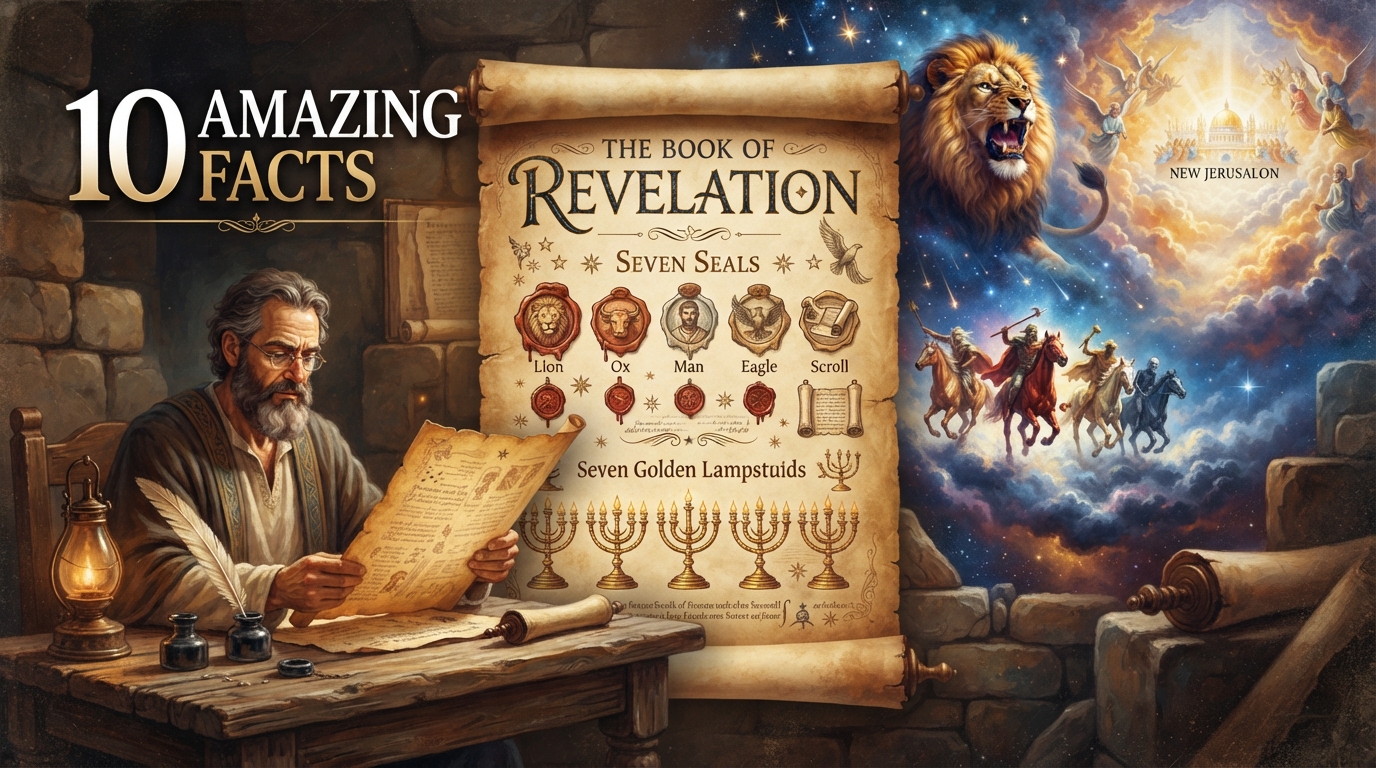
10 Amazing Facts About the Book of Revelation
The Book of Revelation is one of the most fascinating and misunderstood books in the Bible. Its vivid imagery, cosmic battles, and cryptic symbols have sparked endless debates, movies, and even fear. But beneath the surface, Revelation is actually a message of hope, victory, and God’s ultimate plan for humanity.
If you’ve ever felt intimidated or confused by this biblical book, you’re not alone. Many Christians and seekers alike struggle to decode its meaning. That’s why I’ve put together these 10 amazing facts about the Book of Revelation — to shine a light on its purpose, context, and powerful promises.
Whether you’re a seasoned Bible student or just starting to explore Bible prophecy, these insights will help you see this final book in a whole new way. Let’s dive in.
1. Revelation Is Not About Fear — It’s About Victory
One of the biggest misconceptions about Revelation is that it’s only about doom and destruction. In reality, the central theme is Jesus Christ’s ultimate victory over evil. The Greek word “apocalypse” actually means “unveiling” or “revealing,” not destruction.
From chapter 1 to 22, the message is clear: God wins. The Lamb of God triumphs, Satan is defeated, and believers are given a new heaven and a new earth. That’s not a scary story — it’s the greatest good news ever told.
If this perspective feels new to you, you might enjoy exploring more about biblical themes of hope in our Bible study articles.
2. It Was Written in a Time of Severe Persecution
John, the author, was exiled on the island of Patmos (Revelation 1:9) — a Roman penal colony. He wrote to seven churches in Asia Minor that were facing intense pressure to worship the Roman emperor and renounce their faith.
This historical context is key. The book uses coded language to encourage believers to stand firm, not to confuse future generations. Symbols like “the beast” and “Babylon” often referred to the Roman Empire and its oppressive system.
Understanding this setting transforms Revelation from a cryptic puzzle into a survival manual for persecuted Christians.
3. The Number Seven Appears Over 50 Times
Seven is the number of divine perfection and completeness in Scripture, and Revelation is saturated with it. We see seven churches, seven seals, seven trumpets, seven bowls, seven spirits, seven lampstands — the list goes on.
This repetition isn’t accidental. John uses the number seven to reassure readers that God’s plan is complete and perfectly orchestrated. Nothing is chaotic or out of control, no matter how turbulent the visions appear.
For a deeper look at symbolic numbers in Scripture, check out our faith and inspiration section.
4. The Book of Revelation Is Deeply Connected to the Old Testament
Revelation contains more than 500 allusions to the Old Testament — far more than any other New Testament book. John quotes or echoes passages from Isaiah, Ezekiel, Daniel, Zechariah, and the Psalms constantly.
For example, the four living creatures around God’s throne (Revelation 4:6-8) are directly inspired by Ezekiel 1. The New Jerusalem in chapters 21-22 draws heavily from Isaiah 65 and Ezekiel 40-48.
This shows that Revelation isn’t a random collection of strange visions. It’s a masterful tapestry woven from the entire biblical story.
5. The Letters to the Seven Churches Are Still Relevant Today
Chapters 2 and 3 contain Jesus’ personal messages to seven real churches in Ephesus, Smyrna, Pergamum, Thyatira, Sardis, Philadelphia, and Laodicea. Each letter includes a specific commendation, criticism, and promise.
These aren’t just ancient history. Many congregations today struggle with the same issues — losing their first love, compromising with culture, or becoming spiritually lukewarm. Reading these letters can be a powerful mirror for modern faith communities.
To apply these lessons to your daily walk, take a look at our Christian living resources.
6. The Beast’s Number 666 Is Probably a Code
The infamous “mark of the beast” and the number 666 (Revelation 13:18) have inspired endless speculation. But most scholars agree it’s a form of gematria — a Jewish practice where letters have numerical values.
In Hebrew, the name “Nero Caesar” (the Roman emperor who brutally persecuted Christians) adds up to 666. Some ancient manuscripts even read “616,” which also points to Nero. This makes perfect sense in the first-century context.
Of course, Revelation also points to future fulfillment, but the initial audience would have recognized the emperor’s idolatrous system immediately.
7. Revelation Has a Clear, Hopeful Structure
Unlike a confusing dream, Revelation follows a deliberate narrative arc. Here’s a simplified outline:
- Chapters 1-3: John’s vision of Christ and letters to the seven churches
- Chapters 4-5: The heavenly throne room and the Lamb worthy to open the scroll
- Chapters 6-18: The seven seals, trumpets, and bowls — God’s judgments and the rise of evil
- Chapters 19-20: Christ’s return, defeat of Satan, and the final judgment
- Chapters 21-22: The new heaven, new earth, and New Jerusalem
This structure isn’t random; it’s a carefully crafted drama that escalates from warning to judgment to restoration.
8. The New Jerusalem Is Described in Stunning Detail
Revelation 21 paints a breathtaking picture of the eternal home God is preparing for His people. It’s a cube-shaped city — about 1,400 miles wide, long, and high (that’s roughly the distance from Canada to Mexico).
The city has walls of jasper, gates of pearl, and streets of pure gold. More importantly, there is no temple — because God Himself is the temple. There’s no sun or moon — because God’s glory provides the light.
It’s a place where “there will be no more death or mourning or crying or pain” (Revelation 21:4). That’s the real ending of the story.
9. Revelation Encourages Personal Holiness, Not Doomsday Predictions
Many people obsess over trying to match Revelation’s symbols with current events. But John’s main purpose was ethical and spiritual transformation. The book repeatedly calls readers to “overcome” — to stay faithful, pure, and watchful.
For instance, Revelation 22:11-12 urges believers to keep doing right because Jesus is coming soon. It’s a call to live with integrity, not to calculate dates or identify the Antichrist in every political leader.
If you’d like to grow in your personal relationship with God, consider visiting our prayer and devotion section for practical guidance.
10. The Final Chapter Invites Everyone to Come
The very last chapter of the Bible is an open invitation. Revelation 22:17 says, “The Spirit and the bride say, ‘Come!’ And let the one who hears say, ‘Come!’ Let the one who is thirsty come; and let the one who wishes take the free gift of the water of life.”
This powerful verse shows that God’s heart has always been about invitation, not exclusion. No matter where you are in your spiritual journey, Revelation’s final message is one of welcome and grace.
And if you’re looking for a resource to support your overall mental and spiritual clarity while studying these deep topics, confira esta opção — it’s a tool many readers have found helpful for staying focused and sharp.
A Quick Comparison: Common vs. Accurate Interpretations
Let’s clear up some confusion with a simple table.
| Common Misconception | More Accurate Understanding |
|---|---|
| Revelation is only about the distant future | It was written for first-century Christians facing persecution too |
| The book is meant to scare people | It’s a message of hope and victory in Christ |
| 666 refers to a future world leader | Likely a coded reference to Nero, with future typology |
| The prophecies are impossible to understand | They become clearer with context, OT background, and careful study |
Frequently Asked Questions About the Book of Revelation
Who wrote the Book of Revelation?
Tradition and internal evidence point to John the Apostle, the same author of the Gospel of John and the Epistles. He was exiled on Patmos when he received the vision.
When was Revelation written?
Most scholars date it to around A.D. 95-96, during the reign of the Roman emperor Domitian, known for his persecution of Christians.
Is the Book of Revelation in chronological order?
Not necessarily. Many interpreters see it as a series of overlapping visions that retell the same events from different angles, rather than a strict timeline.
What is the mark of the beast?
In Revelation 13, the mark is a sign of allegiance to the beast’s system. In its original context, it likely referred to the imperial cult of Rome. Its future application remains debated among Christians.
Should I be afraid of the Book of Revelation?
Not at all. While it contains sobering warnings, the dominant message is comfort, hope, and the assurance that God’s justice and love will ultimately prevail.
How is Jesus portrayed in Revelation?
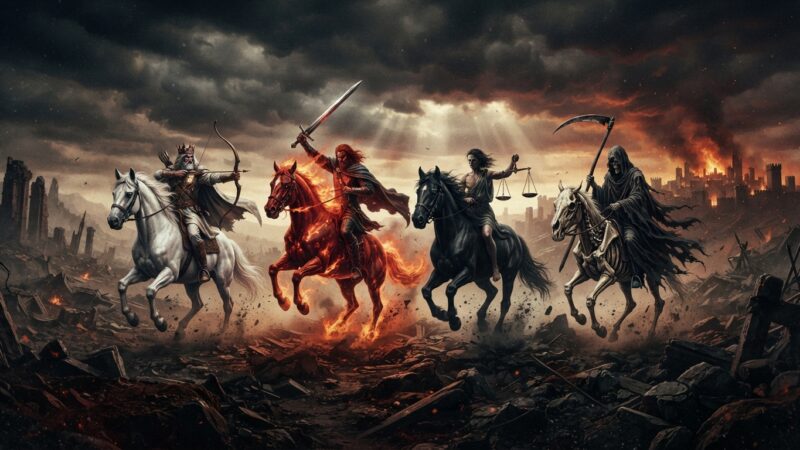
Jesus appears in multiple forms — as the glorious Son of Man, the Lamb who was slain, the Lion of Judah, the Rider on a white horse, and the Alpha and Omega. He is both Judge and Savior.
Can I understand Revelation without a theology degree?
Absolutely. Start by reading it in a modern translation, look up Old Testament cross-references, and focus on the main point: God wins, and He invites you to be part of His eternal family.
What is the best way to study Revelation?
Read it prayerfully, in community with other believers, and use trusted commentaries. Avoid sensationalist interpretations that ignore the historical context. For more guidance, explore our Bible prophecy and End Times articles.
Conclusion
The Book of Revelation is a masterpiece of divine revelation. It’s not a confusing code to be cracked, but a glorious promise to be embraced. From its victory-centered message to its breathtaking vision of a restored creation, this book speaks directly to the hopes and fears of every generation.
As you continue your journey through Bible prophecy, remember that the Author of Revelation is the same God who loves you, died for you, and is preparing a place for you. The end of the story is not destruction — it’s a wedding feast.
Let the words of Revelation 22:20 echo in your heart: “Amen. Come, Lord Jesus.”