7 Powerful Lessons From the Book of Daniel
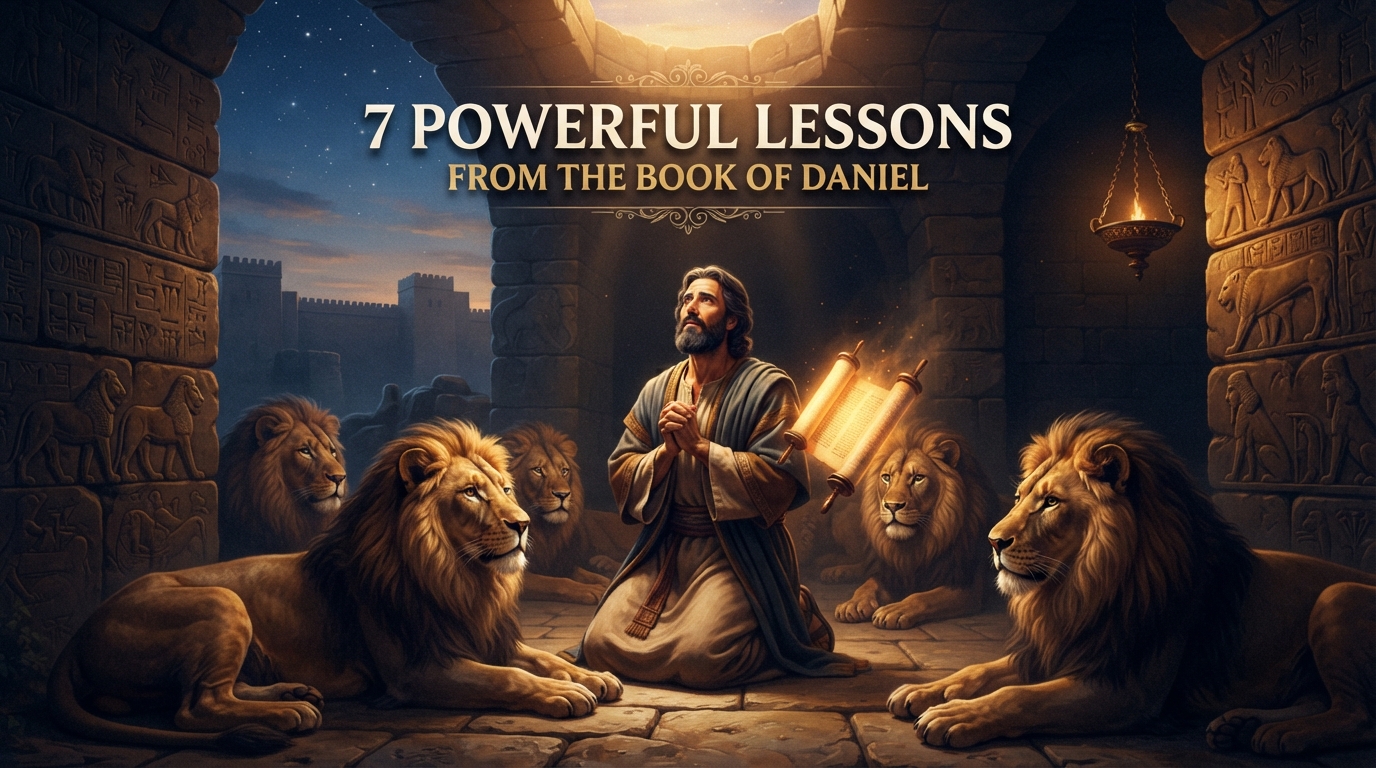
The Book of Daniel is one of the most fascinating and prophetic books in the Bible. It’s packed with dreams, lions, fiery furnaces, and visions that stretch all the way to the end of time. But beyond the dramatic stories, Daniel offers timeless wisdom for anyone trying to navigate a world that often feels chaotic and hostile to faith.
Whether you’re studying the lessons from the Book of Daniel for personal growth or for a deeper understanding of biblical prophecy, these seven insights will challenge, encourage, and equip you. Let’s dive in.
1. Stand Firm Without Being Arrogant
Daniel and his friends were taken captive to Babylon, a culture completely opposed to their faith. Yet they didn’t withdraw entirely or lash out in anger. Instead, they respectfully declined the king’s food and wine, proposing a simple test instead.
The lesson here is crucial: You can stay true to your convictions without being rude or self-righteous. Daniel’s humility and wisdom opened doors rather than closing them. This balance between grace and truth is a hallmark of mature faith.
If you’re facing pressure to compromise at work or school, remember Daniel’s approach. He didn’t start a rebellion—he simply made a humble request. That bold-yet-gentle spirit is a powerful witness.
2. God Speaks Through Dreams and Prophecy
Nebuchadnezzar’s dream of the great statue is one of the most famous Book of Daniel prophecy passages. God revealed the rise and fall of world empires—Babylon, Persia, Greece, Rome, and a final kingdom that will never be destroyed.
This teaches us that God is sovereign over history. He knows the end from the beginning. When you study this prophecy, you see that no empire, no matter how powerful, escapes God’s timeline.
For those interested in end-times Bible study, Daniel’s visions offer a framework for understanding Revelation. The same God who revealed mysteries to Daniel still speaks today.
3. Integrity Is Built in the Small Decisions
Daniel didn’t start with a huge test of faith. He first decided not to defile himself with royal food. That small act of obedience prepared him for the lion’s den later.
This is one of the most practical lessons from the Book of Daniel: integrity is cumulative. If you’re faithful in small things, God will trust you with bigger ones. Don’t underestimate the power of daily choices.
Here’s a simple comparison of Daniel’s small vs. big tests:
| Small Test (Daniel 1) | Big Test (Daniel 6) |
|---|---|
| Refusing king’s food | Refusing to stop praying |
| Private obedience | Public defiance under threat of death |
| Three friends supported him | He stood alone |
4. Prayer Is Your Secret Weapon
When a decree banned prayer to anyone but the king, Daniel didn’t panic. He simply went home, opened his windows toward Jerusalem, and prayed as he always did. He didn’t hide, but he didn’t flaunt it either—he just stayed consistent.
This is a powerful model for faithful prayer life in difficult times. Daniel’s prayer life wasn’t a performance; it was a habit. And that habit saved him—literally. The lions couldn’t touch him because his trust was in God, not in the king’s favor.
If you’re facing a threatening situation, ask yourself: Is my prayer life strong enough to carry me through? Start building that habit today.
5. God’s Protection Doesn’t Mean No Pain
Look at the three friends in the fiery furnace. They were thrown in, but God protected them. However, they didn’t know He would until the last moment. Their famous line says it all: “Our God is able to deliver us… but even if He doesn’t…”
This is faith in its rawest form. You trust God not because He promises an easy life, but because He is worthy. This lesson is essential for anyone studying end-times Bible study, where persecution is real.
Sometimes God delivers you through the fire, not from it. Either way, He is with you. That’s the promise.
6. Pride Leads to a Fall (Literally)
Nebuchadnezzar looked at his kingdom and said, “Look what I built by my own power.” Instantly, God humbled him. He lived like a wild animal for seven years until he acknowledged that God is sovereign.
This is a stark warning. Pride is dangerous, especially for leaders. The Book of Daniel shows that God opposes the proud but gives grace to the humble. No human empire, no personal success, lasts without God’s permission.
This ties directly to faith in difficult times: when you’re tempted to think you’ve made it on your own, remember who holds the real power.
7. The End Is Already Written—And God Wins
Daniel’s visions in chapters 7–12 are intense. Beasts, horns, wars, and a final judgment. But the climax is clear: the Son of Man receives an eternal kingdom, and the saints will reign with Him.
This is the ultimate lessons from the Book of Daniel for today: no matter how dark the headlines get, the outcome is already decided. God wins. Evil is temporary. Justice will come.
Reading Daniel’s prophecies isn’t just about predicting dates—it’s about anchoring your hope in God’s sovereignty. For a deeper dive into these themes, explore our Christian living resources to apply these truths daily.
If this study has sharpened your mind and spirit, you might also enjoy exploring tools that help keep your thinking clear and focused. Confira esta opção para apoiar uma mente mais aguçada e saudável—a great companion for deeper study.
FAQ: Your Questions About the Book of Daniel Answered
1. What is the main message of the Book of Daniel?
The main message is that God is sovereign over all human history and rulers. He protects His faithful people and will ultimately establish His eternal kingdom.
2. How does the Book of Daniel relate to end-times prophecy?
Daniel’s visions (chapters 2, 7–12) provide a prophetic timeline that aligns with the Book of Revelation. They describe the rise and fall of empires and the final victory of God’s kingdom.
3. Was Daniel a real historical figure?
Yes. Most conservative scholars affirm Daniel’s historicity. Jesus Himself referred to Daniel as a prophet (Matthew 24:15), confirming his real existence and authority.
4. Why did Daniel refuse the king’s food?
He likely refused it because it was offered to idols and violated Jewish dietary laws. He chose to remain pure and faithful to God rather than compromise for comfort.
5. What does the statue in Nebuchadnezzar’s dream represent?
The statue’s four metals represent four successive world empires: Babylon (gold), Persia (silver), Greece (bronze), and Rome (iron). The rock represents God’s eternal kingdom.
6. How can I apply Daniel’s lessons today?
Start by being faithful in small daily choices, maintain a consistent prayer life, and trust God even when you don’t see immediate deliverance. That’s the Daniel way.
7. Is the Book of Daniel difficult to understand?
Some parts are challenging, especially the apocalyptic visions. But the core lessons about faith, integrity, and God’s sovereignty are clear and accessible to anyone. A good faith-centered study guide can help.
Conclusion
The lessons from the Book of Daniel are not just ancient history—they are a survival manual for living faithfully in a world that often opposes God. From integrity and prayer to prophecy and hope, Daniel shows us how to stand firm until the end.
Whether you’re studying for personal growth or preparing for what’s ahead, let Daniel’s example inspire you. The same God who shut the lions’ mouths and walked through the fire is with you today. Keep the faith, stay humble, and remember: the end of the story is already written—and it’s glorious.