The Connection Between Daniel and Revelation Explained
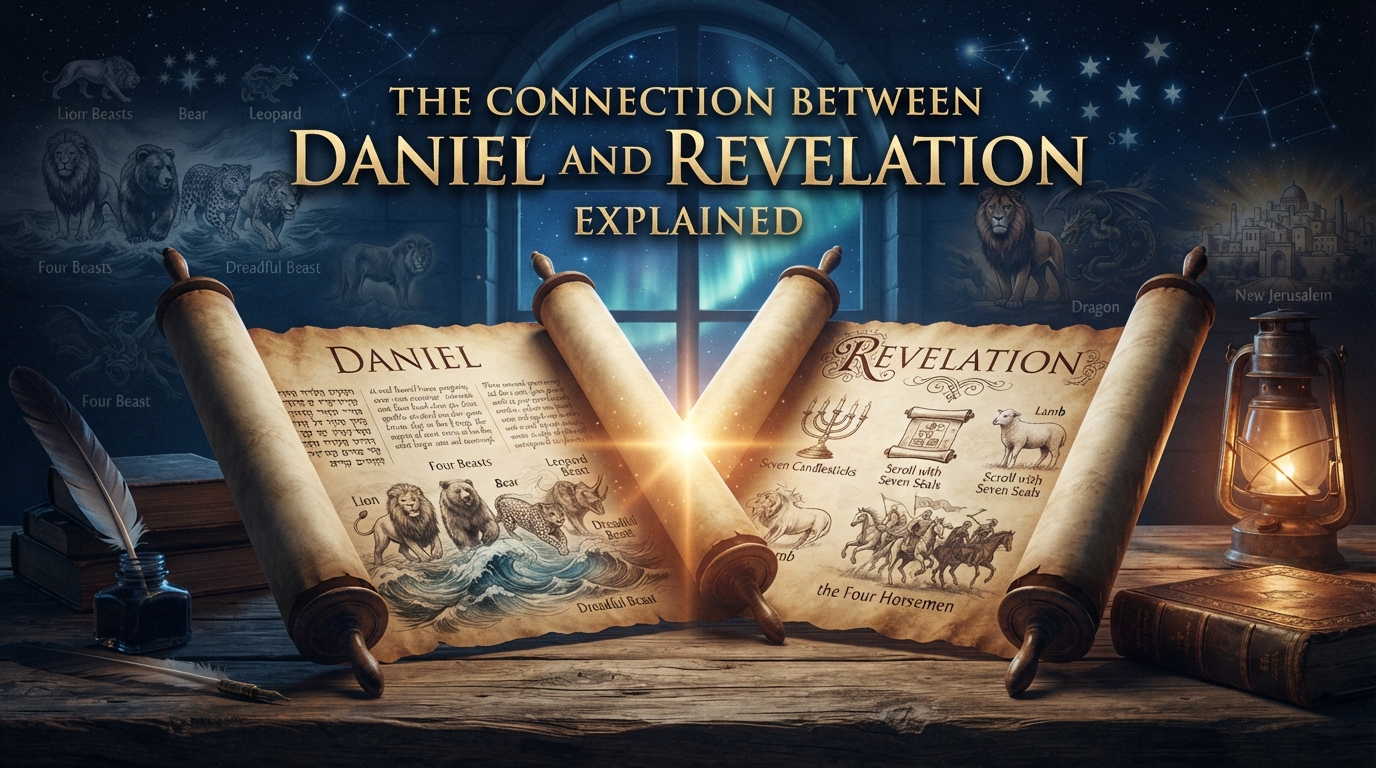
If you’ve ever flipped through the pages of Daniel and Revelation, you might have noticed they feel like two halves of the same puzzle. The book of Daniel sets the stage with visions of empires, beasts, and a coming kingdom. Revelation pulls back the curtain and shows the final act.
Understanding the connection between Daniel and Revelation isn’t just an academic exercise. It helps you see the bigger picture of God’s plan. Whether you’re a longtime student of Bible prophecy or just starting out, this guide will walk you through the major links between these two powerful books.
Let’s dive into the symbols, timelines, and themes that tie them together. Along the way, we’ll explore how they speak to end times prophecy and what that means for your faith today. If you’re looking for more foundational study, check out our Bible study resources for deeper insights.
1. Shared Symbols: Beasts, Horns, and Kingdoms
One of the most obvious connections is the imagery of beasts. In Daniel 7, four great beasts rise from the sea—a lion, a bear, a leopard, and a terrifying fourth beast with iron teeth. These represent successive world empires.
In Revelation 13, a beast rises from the sea with seven heads and ten horns. John borrows directly from Daniel’s imagery. The ten horns on the beast in Revelation echo the ten horns on Daniel’s fourth beast.
Both authors use these symbols to show how human empires oppose God’s kingdom. But the message is hopeful: in both books, the beast is ultimately defeated. If you want to explore how these prophecies apply to current events, our end times prophecy articles offer a closer look.
2. The Seventy Weeks and the Final Timeline
Daniel’s prophecy of the seventy weeks (Daniel 9) gives a detailed timeline from the rebuilding of Jerusalem to the coming of the Messiah. It’s one of the most precise prophetic timelines in Scripture.
Revelation picks up where Daniel leaves off. The final week—the seventieth week—is often understood as the seven-year tribulation period described in Revelation 6–19. John expands on the events Daniel only hinted at.
This shared framework helps you see that God operates on a schedule. The book of Daniel interpretation gives the starting point; Revelation shows the finish line. Together, they provide a cohesive picture of God’s redemptive plan.
3. The Son of Man: Two Visions, One Figure
In Daniel 7:13-14, the prophet sees “one like a son of man” coming with the clouds of heaven. He is given authority, glory, and an everlasting kingdom. This figure is clearly the Messiah.
In Revelation, John describes a similar scene. In Revelation 1:13, he sees “one like a son of man” among the lampstands, dressed in a robe with a golden sash. Then in Revelation 14:14, he sees the same figure on a white cloud with a sharp sickle.
The connection is deliberate. John uses Daniel’s language to identify Jesus as the same divine ruler. If you’re interested in how this shapes daily faith, take a look at our Christian living articles for practical application.
4. Judgment Scenes: Thrones, Books, and the End
Both books feature stunning judgment scenes. In Daniel 7:9-10, the Ancient of Days sits on a fiery throne. Thousands attend Him, and the books are opened. The beast is judged and destroyed.
Revelation 20:11-15 shows the great white throne judgment. The earth and sky flee, and the dead are judged by what is written in the books. Anyone not found in the Book of Life is thrown into the lake of fire.
These parallel scenes emphasize that history has a courtroom moment. Justice isn’t delayed forever. God’s judgment is both certain and righteous, tying together the connection between Daniel and Revelation in a powerful way.
5. The Resurrection of the Dead
Daniel 12:2 speaks plainly: “Many of those who sleep in the dust of the earth shall awake, some to everlasting life, and some to shame and everlasting contempt.” This is one of the clearest Old Testament references to a general resurrection.
Revelation 20 develops this into two resurrections. The first resurrection involves those who belong to Christ and reign with Him for a thousand years. The second resurrection brings the rest of the dead to final judgment.
This shared teaching shows that the biblical story isn’t just about the soul living on—it’s about the body being raised. For more on how this hope shapes your prayer life, explore our prayer and devotion section.
Understanding this connection can sharpen your mind and spirit. If you’re looking for tools to stay focused during study, confira esta opção for resources that support mental clarity and deeper reflection.
6. The Kingdom That Never Ends
Both books end with the same hope: a kingdom that cannot be destroyed. Daniel describes a stone that smashes the image of human empires and grows into a mountain filling the earth (Daniel 2).
Revelation ends with a new heaven and a new earth. The Holy City, the New Jerusalem, descends from heaven. God dwells with His people, and there is no more death, mourning, or pain.
This is the ultimate fulfillment of Daniel’s prophecies. The Revelation symbolism of the city and the tree of life echoes the Garden of Eden and the promise made to Abraham. It’s the story of redemption, complete from start to finish.
7. Practical Lessons for Today
These connections aren’t just for scholars. They remind you that God is in control of history. When you read the news and feel anxious, Daniel and Revelation together assure you that the end is already written.
They also call you to live faithfully now. Daniel’s friends refused to bow to the image. The saints in Revelation overcome by the blood of the Lamb. Both books emphasize endurance and trust.
For daily encouragement, check out our faith and inspiration articles to strengthen your walk.
Key Similarities at a Glance
| Theme | Daniel | Revelation |
|---|---|---|
| Beast imagery | Four beasts from the sea (ch. 7) | Beast with seven heads (ch. 13) |
| Son of Man | Comes with clouds (7:13) | Seen among lampstands (1:13) |
| Judgment scene | Ancient of Days on throne (7:9) | Great white throne (20:11) |
| Resurrection | Many awake to life or shame (12:2) | Two resurrections (20:4-6) |
| Everlasting kingdom | Stone kingdom fills earth (2:44) | New Jerusalem descends (21:2) |
Frequently Asked Questions
1. Is Revelation directly quoting Daniel?
Yes, John frequently alludes to Daniel’s language. For instance, the “son of man” and the beast with ten horns are direct borrowings. John assumes his readers know Daniel.
2. What is the main connection between Daniel and Revelation?
Both books reveal God’s sovereignty over history and the ultimate victory of His kingdom. Daniel provides the prophetic foundation; Revelation shows its fulfillment.
3. Does Daniel predict the tribulation period in Revelation?
Many scholars believe the seventieth week of Daniel (9:27) corresponds to the tribulation described in Revelation 6–19. The abomination of desolation also reappears in Revelation.
4. Why do both books use symbols like beasts and horns?
Apocalyptic literature uses symbolic imagery to convey spiritual truths. Beasts represent oppressive empires, and horns represent kings or powers. This style was common in Jewish prophecy.
5. Can you understand Revelation without reading Daniel?
It’s possible, but you’ll miss important context. Daniel establishes the timeline, imagery, and hope that Revelation builds on. Reading them together gives you a richer understanding.
6. What does the stone in Daniel 2 represent?
The stone that crushes the statue represents God’s kingdom, which will destroy all human empires and endure forever. Revelation shows this kingdom in its final form.
7. Are the four beasts in Daniel the same as the beast in Revelation?
Not exactly. Daniel’s four beasts represent four successive empires (Babylon, Medo-Persia, Greece, Rome). Revelation’s beast combines features from all four, symbolizing the final anti-God empire.
8. How do Daniel and Revelation encourage believers today?
They remind us that no matter how chaotic the world seems, God’s plan is on track. Both books call us to faithful endurance and hope in the coming kingdom.
Conclusion
The connection between Daniel and Revelation is not a coincidence. It’s a deliberate, inspired link that spans centuries. Daniel planted the seeds. John harvested the full revelation.
When you study them together, you see the big picture: God is working through history to bring about redemption. The same God who gave Daniel visions of future empires also showed John the final victory of the Lamb.
So keep reading, keep asking questions, and keep trusting. The end of the story is already written—and it’s good. Dive deeper into Bible prophecy and end times with our curated resources, and let these ancient words shape your hope for tomorrow.