
What Jesus Taught His Disciples About the Last Days
If you have ever felt a knot in your stomach when you watch the evening news, you are not alone. Wars, earthquakes, famines, and political chaos make it tempting to panic. But Jesus gave His followers a completely different perspective. He did not want them to be terrified. Instead, He wanted them to be prepared, watchful, and confident.
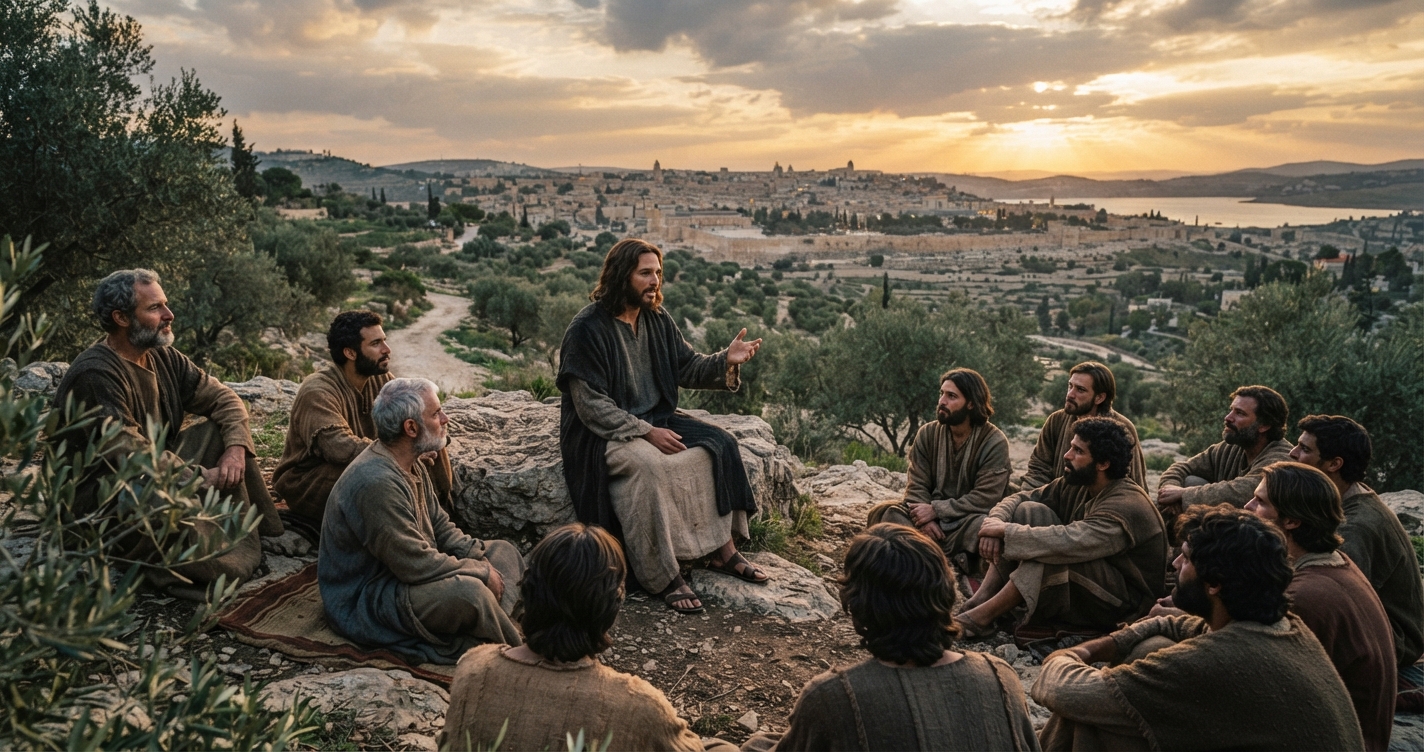
In the Gospel of Matthew, chapters 24 and 25—often called the Mount Olivet discourse—Jesus sat with His disciples on a hillside overlooking Jerusalem. They had just asked Him a heavy question: “What will be the sign of Your coming and of the end of the age?” Jesus answered them directly and honestly. What He shared remains the most important guide we have for navigating these uncertain times.
Let’s break down exactly what Jesus taught His disciples about the last days, and see how His words speak to us today.
1. Do Not Be Deceived: The First Warning Jesus Gave
The very first thing Jesus said when His disciples asked about the end times was a warning: “Take heed that no one deceives you” (Matthew 24:4). He knew that deception would be one of the greatest dangers in the last days. Many would come claiming to be the Messiah. False prophets would rise up with convincing signs and wonders.
Jesus did not say, “Look for a specific date on the calendar.” He said, “Look out for false teachers.” This is a strong reason why every believer needs to ground themselves in solid Bible study. Knowing Scripture is the only way to spot a counterfeit message. When you know the true voice of the Shepherd, you will not follow a stranger.
A healthy skepticism toward dramatic claims is actually a sign of spiritual maturity. Do not let anyone convince you that they know the exact day of Christ’s return. Jesus Himself said that even He did not know that day—only the Father does.
2. Wars, Rumors, and Earthquakes: Birth Pains, Not the End
Jesus told His disciples plainly: “You will hear of wars and rumors of wars. See that you are not troubled; for all these things must come to pass, but the end is not yet” (Matthew 24:6). This is one of the most misunderstood parts of Bible prophecy. Many people assume that a major war is a direct signal that Jesus is about to return immediately.
But Jesus compared these events to “birth pains” (Matthew 24:8). Birth pains start slowly and increase in frequency and intensity over time. So wars, famines, earthquakes, and pandemics are not the finish line—they are the beginning of the labor.
This perspective changes everything. Instead of living in fear, we can recognize these signs as part of God’s sovereign plan. They remind us to stay alert and keep our faith strong. For those seeking peace in the midst of chaos, it helps to explore resources on prayer and devotion to remain anchored in God’s promises.
3. Persecution Will Come—But It Is Not the Final Word
Jesus did not sugarcoat the future for His closest followers. He told them they would be handed over to councils, flogged in synagogues, and brought before governors and kings because of their faith in Him (Matthew 24:9). He also warned that many would fall away, betray one another, and hate one another.
Why would Jesus share such a harsh reality? Because He wanted them to be prepared, not surprised. Persecution has been a reality for Christians since the first century, and it continues today in many parts of the world. Knowing this in advance helps believers build spiritual endurance.
The Apostle Paul later echoed this, saying, “Everyone who wants to live a godly life in Christ Jesus will be persecuted” (2 Timothy 3:12). The key is living faithfully in everyday Christian living, even when the world turns hostile. Faith is not proven by comfort; it is proven by standing firm under pressure.
4. The Gospel Will Preach to All Nations—That Is the Goal
Here is a game-changer: Jesus said, “This gospel of the kingdom will be preached in all the world as a witness to all the nations, and then the end will come” (Matthew 24:14). This means the end is not triggered by how bad the world gets. It is triggered by how far the gospel spreads.
This flips the narrative entirely. Instead of obsessing over world events, the disciples were given a mission. Jesus essentially said, “Do not just sit around staring at the sky. Get busy preaching the good news.” The last days are not a time for passivity. They are a time for action.
Every believer has a role to play in this global witness. Whether you share your faith with a neighbor, support a missionary, or create content that points people to Christ, you are helping to fulfill this prophecy. This should give you a sense of purpose rather than fear.
5. The Abomination of Desolation: Understanding the Specific Sign
Jesus gave one very specific sign for those living in Judea: when they see the “abomination of desolation” standing in the holy place, they should flee to the mountains (Matthew 24:15-16). This phrase comes from the prophet Daniel. Historically, it referred to the desecration of the Jewish temple.
Many scholars believe this points to a future event during a period called the Great Tribulation. Jesus described it as a time of distress unequaled from the beginning of the world until that time. He even said that if those days were not cut short, no one would survive.
For the disciples—and for us—this teaches that God is still in control. He sets limits on chaos. He protects His elect. This prophecy encourages us to take God’s warnings seriously while trusting His mercy. It is a call to be spiritually ready, not just intellectually informed.
6. Watch and Be Ready: The Parable of the Fig Tree and the Wise Servants
Jesus ended His discourse with powerful illustrations. He told the parable of the fig tree: when its branch becomes tender and puts forth leaves, you know summer is near. Likewise, when you see all these signs, you know His return is near—at the very doors (Matthew 24:32-33).
Then He shifted to the parable of the faithful and evil servants. One servant was wise, doing his master’s work. The other was wicked, thinking the master was delayed, and he began to abuse others. Jesus made it clear: the master will return unexpectedly, and the faithful servant will be rewarded.
The core message? Stay awake. Be ready. Live like Jesus could come today, but work like He could come in a hundred years. That balance of anticipation and faithful service is the heartbeat of end times living.
How to Apply What Jesus Taught About the Last Days
All of this teaching leads to a practical conclusion. Jesus did not give us a detailed timeline or a sensational prediction. He gave us a lifestyle. He wants His followers to be:
- Discerners — not fooled by false christs and false prophets
- Steadfast — enduring persecution without losing faith
- Witnesses — actively sharing the gospel with the world
- Watchful — living each day with eternal perspective
- Faithful — serving God’s purposes until the very end
These five practices turn end times anxiety into confident hope. If you want to dive deeper into what Scripture says about future events, check out our full category on Bible prophecy and end times for more studies and insights.
The Difference Between Fear and Faith in the Last Days
Fear says, “Look at how terrible everything is.” Faith says, “Look at how God is still on the throne.” Jesus taught His disciples to live from a place of faith, not fear. The signs He described were not given to terrify us, but to encourage us that our redemption is drawing near.
In the same teaching, Jesus said, “When these things begin to happen, look up and lift up your heads, because your redemption draws near” (Luke 21:28). That is the Christian response to the last days—not hiding in a bunker, but standing tall with hope.
To strengthen that hope, focus on growing your walk with God daily. Read Scripture, pray, and connect with other believers. For additional encouragement, the category on faith and inspiration offers stories and devotions to keep your spirit lifted.
Comparison: What Jesus Taught vs. What Many Preach Today
| What Jesus Taught His Disciples | What Many People Believe Today |
|---|---|
| Wars and disasters are birth pains, not the final sign | Every major event means Jesus is coming next week |
| Deception is the greatest danger | Political chaos is the greatest danger |
| Persecution is normal and expected | Comfort and ease are signs of God’s blessing |
| The gospel must reach all nations first | The end is determined by world events alone |
| Stay watchful and faithful in service | Set dates, make charts, and guess timelines |
This table shows just how far popular culture has drifted from what Jesus actually taught. Going back to the source—the Bible—is the only way to get clarity. A deep Bible study approach helps correct these misunderstandings and keeps your faith aligned with Scripture.
Frequently Asked Questions About the Last Days
1. Did Jesus give a specific date for His return?
No. Jesus explicitly said that no one knows the day or hour except the Father in heaven (Matthew 24:36). Anyone who claims to have figured out the exact date is not following what Jesus taught.
2. What is the most important sign of the end times?
The most important sign is the global preaching of the gospel (Matthew 24:14). When the good news has reached every nation as a witness, then the end will come. This puts the focus on mission, not fear.
3. Are we living in the last days right now?
According to the Bible, we have been in the last days since Jesus ascended to heaven (Hebrews 1:2). Every generation since then has lived in the last days. But the signs Jesus described may be intensifying in our time.
4. Should Christians be afraid of the end times?
No. Jesus told His disciples not to be troubled. He gave them signs so they would be prepared, not panicked. Faith overcomes fear when we trust in God’s plan.
5. What does “abomination of desolation” mean?
It refers to something that defiles the temple and causes great desolation. Jesus referenced a future fulfillment of this prophecy from Daniel. It is a key event marking the midpoint of the tribulation period.
6. What happens to believers during the tribulation?
Views vary among Christians. Some believe the church will be raptured before the tribulation. Others believe believers will go through it but be protected. Either way, Jesus promised to be with His followers always.
7. How should I prepare for the end times?
Focus on your relationship with God daily. Study Scripture, share your faith, forgive others, and live with integrity. Jesus said the wise servant is the one found doing his master’s will when the master returns.
8. Will everyone have a chance to be saved before Christ returns?
Jesus taught that the gospel would be preached to all nations. God desires all people to come to repentance. However, personal response is still required. Today is always the best day to turn to Him.
Conclusion: Live in Light of What Jesus Taught
What Jesus taught His disciples about the last days was never meant to be a source of fear. It was a gift of clarity. He pulled back the curtain and said, “Now you know. So stay alert. Stay faithful. Stay on mission.”
The world will keep spinning with its wars, its disasters, and its deceptions. But as followers of Jesus, we have something that the world does not have: the end of the story. And in that story, Jesus wins. Every knee will bow. Every tear will be wiped away. The kingdom will come fully.
So do not let the headlines shake you. Let the Word of God steady you. And if you want to sharpen your focus even more, confira esta opção for supporting a sharper, healthier mind as you stay alert in these days. Keep your heart anchored in Christ, and you will be ready for whatever comes next.