How to Find Hope in Bible Prophecy During Uncertain Times
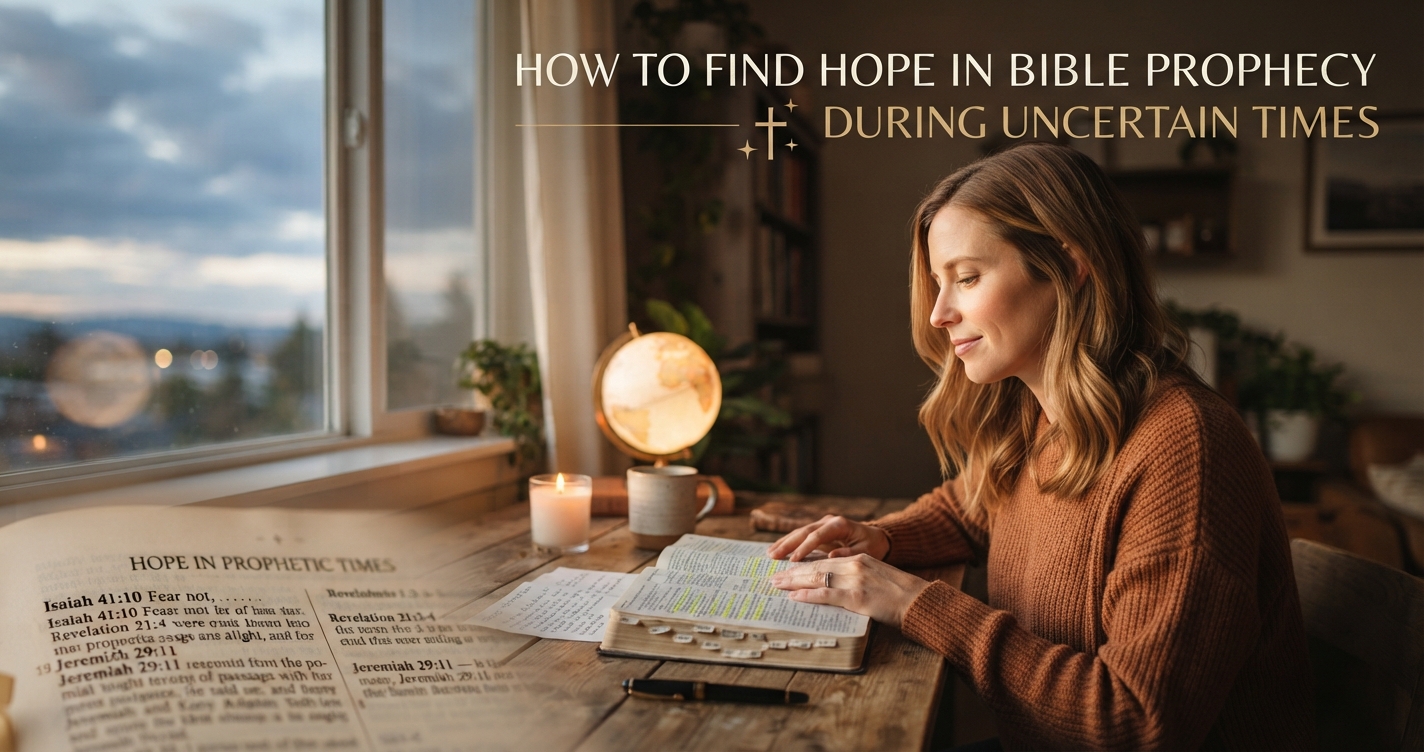
In a world that often feels like it’s spinning out of control, it’s easy to lose sight of the bigger picture. Economic instability, global conflicts, natural disasters — the news cycle can leave even the most faithful among us feeling anxious. But here’s the truth: hope in Bible prophecy isn’t about escaping reality. It’s about anchoring yourself in a reality that never changes.
Whether you’re new to studying Bible prophecy and end times or you’ve been digging into Scripture for years, this article will show you how to shift your focus from fear to faith. Let’s explore what God’s Word actually says about the future — and why it’s the best news you’ll hear today.
Why Bible Prophecy Matters Right Now
Prophecy can feel intimidating. Some people associate it with cryptic charts, conflicting interpretations, or doomsday predictions. But at its core, Bible prophecy is about one thing: God’s faithfulness. It’s a reminder that history is not random. It’s moving forward under His control.
When you study prophetic promises in Scripture, you realize that God has never broken a single one. Every fulfilled prophecy in the Old Testament points to Jesus as the ultimate proof that God keeps His word. That track record is the foundation of biblical hope today.
If you want to deepen your study of Scripture, check out our Bible study resources for practical guides on interpreting prophecy with confidence.
Understanding the Purpose of Prophecy: Encouragement, Not Fear
One of the biggest misconceptions about end times hope is that it’s meant to scare us into obedience. But that’s not what the Bible teaches. The apostle Paul wrote, “For everything that was written in the past was written to teach us, so that through the endurance taught in the Scriptures and the encouragement they provide we might have hope” (Romans 15:4).
Prophecy is a gift. It’s God telling us the end of the story so we can live with peace in the middle of the chaos. Think of it like reading the final chapter of a book before you start — suddenly, the hard parts don’t seem so overwhelming because you already know how it turns out.
Key Prophetic Promises That Bring Peace
Let’s get practical. Here are three specific prophetic promises from Scripture that can transform your perspective during uncertain times:
- Jesus is coming back (John 14:1-3): He promised to prepare a place for us and return. That’s not a maybe — it’s a guarantee.
- Evil will not win (Revelation 21:4): Suffering, pain, and death will one day be gone forever. Justice will prevail.
- God is with us now (Matthew 28:20): Until the end, Christ promises His presence. You are never alone in the waiting.
When you meditate on these truths, your anxiety starts to lose its grip. Hope becomes more than a feeling — it becomes a decision rooted in God’s character.
How to Read Prophecy Without Getting Overwhelmed
A common struggle is that prophetic books like Daniel, Ezekiel, and Revelation can be dense. If you’ve ever tried to read Revelation in one sitting and ended up more confused than encouraged, you’re not alone.
Here’s a simple approach: start with the Gospels. Focus on Jesus’ own words about the future. Then move to the epistles, where Paul, Peter, and John explain how prophecy affects our daily lives. Save the highly symbolic books for later, and always read them in community or with trusted commentaries.
For practical tools to navigate these topics, explore our content on Christian living — it’s designed to help you apply Scripture to real life.
Comparing Fear-Based vs. Hope-Based Perspectives on the End Times
It helps to see the difference clearly. Take a look at this table comparing two mindsets:
| Fear-Based Perspective | Hope-Based Perspective |
|---|---|
| “The world is falling apart.” | “God is working all things for good.” |
| “I’m worried about the future.” | “My future is secure in Christ.” |
| “Prophecy is confusing.” | “I can learn step by step.” |
| “Evil might win.” | “Jesus has already won.” |
Which column describes your daily thoughts? If it’s the first one, don’t be discouraged. The shift happens when you intentionally feed your mind with God’s Word instead of the news cycle.
Practical Steps to Cultivate Hope in Bible Prophecy Daily
Hope isn’t a switch you flip once. It’s a muscle you exercise. Here are some practical steps to keep your focus on biblical hope:
- Start your day with a prophetic promise. Read one verse and write it down. Keep it visible.
- Pray with expectation. Thank God that His plans for you are good, even when circumstances feel hard.
- Join a community. Studying prophecy alone can be isolating. Find a small group or connect with others through our prayer and devotion resources.
- Limit doom-scrolling. Balance what you consume. For every news article, read one chapter of Scripture.
Over time, these habits rewire your mind. Anxiety decreases, and peace — rooted in hope in Bible prophecy — becomes your default response.
Why the End Times Are Actually Good News
Think about it: if this life is all there is, then injustice, suffering, and loss are meaningless. But if the end times are real, then every tear is seen, every wrong is made right, and every faithful step matters. That’s not bad news — it’s the best news possible.
As theologian and author N.T. Wright says, “The point of prophecy is not to give us a timeline but to give us hope.” And that hope transforms how we live today.
For more encouragement on staying grounded in your faith, visit our faith and inspiration section.
Frequently Asked Questions (FAQ)
1. Is it wrong to feel anxious about the end times?
No. Anxiety is a natural human response. But God doesn’t want you to stay there. He invites you to bring your fears to Him and exchange them for peace through His promises.
2. How can I know if a prophetic interpretation is correct?
Always compare interpretations with the whole counsel of Scripture. A reliable interpretation will point you to Jesus, not confuse or frighten you. Seek guidance from mature believers and trusted teachers.
3. Does Bible prophecy predict specific dates?
No. Jesus Himself said no one knows the day or hour (Matthew 24:36). Be wary of anyone claiming to have a precise timeline. True prophecy focuses on readiness, not prediction.
4. What’s the difference between prophecy and prediction?
Predictions are human guesses about the future. Prophecy is God revealing His purposes. One is uncertain; the other is 100% reliable because it comes from the Creator of time itself.
5. Can I study prophecy if I’m new to the Bible?
Absolutely. Start with the Gospel of John and the Book of Acts. Then move to 1 Thessalonians 4-5 and Revelation. Take it slow, and don’t be afraid to ask questions.
6. How do I stay hopeful when I see bad news every day?
Limit your exposure to news, and increase your exposure to Scripture. Meditate on verses like Romans 8:28 and Revelation 21:1-4. Remember: God’s kingdom is advancing, even when it doesn’t look like it.
7. Is it possible to be too focused on prophecy?
Yes, if it leads to neglecting your daily responsibilities or loving others less. Prophecy should fuel your faith, not distract you from loving God and your neighbor. Balance is key.
8. What’s the most hopeful verse about the end times?
Revelation 21:4 is a strong contender: “He will wipe every tear from their eyes. There will be no more death or mourning or crying or pain, for the old order of things has passed away.” That’s the ultimate promise of hope.
Conclusion: Anchor Your Hope in the Unshakable
Uncertain times are not new. Every generation has faced its own storms. What makes the difference is where we place our trust. When your hope is built on hope in Bible prophecy, you’re not ignoring reality — you’re seeing it through the lens of eternity.
God has not left you without direction. He has given us His Word, His Spirit, and His promises. They are more than enough to carry you through anything the future brings.
So take a deep breath. Open your Bible. And let the prophetic promises of God remind you: the best is yet to come.