Why Millions Are Rediscovering Faith in 2026
The Unlikely Return of Faith in a High-Tech World
In 2026, something unexpected is happening. After decades of declining religious affiliation across the Western world, millions of people are turning back to faith. It is not a loud, televised revival. It is quieter, more personal, and deeply digital.
From busy professionals to college students, people are asking big questions again. They are looking for meaning beyond the screen, beyond the news cycle, and beyond the next product launch. This cultural shift is real, and it is reshaping how we understand spiritual renewal in the modern age.
But why now? What makes 2026 different from the years before? Let us explore the key reasons behind this surprising movement.
The Search for Meaning in an Automated World
Artificial intelligence, remote work, and constant connectivity have made life more efficient, but they have also made it more empty. Many people feel like cogs in a machine. They have everything they need materially but nothing that feeds the soul.
That is where rediscovering faith in 2026 comes in. Faith offers something that algorithms cannot: purpose, forgiveness, and a story bigger than yourself. People are realizing that no app can answer the question, “Why am I here?”
This hunger for meaning is driving thousands to explore Christianity, Judaism, Islam, and other traditions. Some are returning to the religion of their childhood. Others are discovering faith for the first time.
How Community Became the Antidote to Loneliness
Loneliness was declared a public health crisis in several countries just a few years ago. Social media promised connection but delivered comparison. People felt isolated in crowded digital spaces.
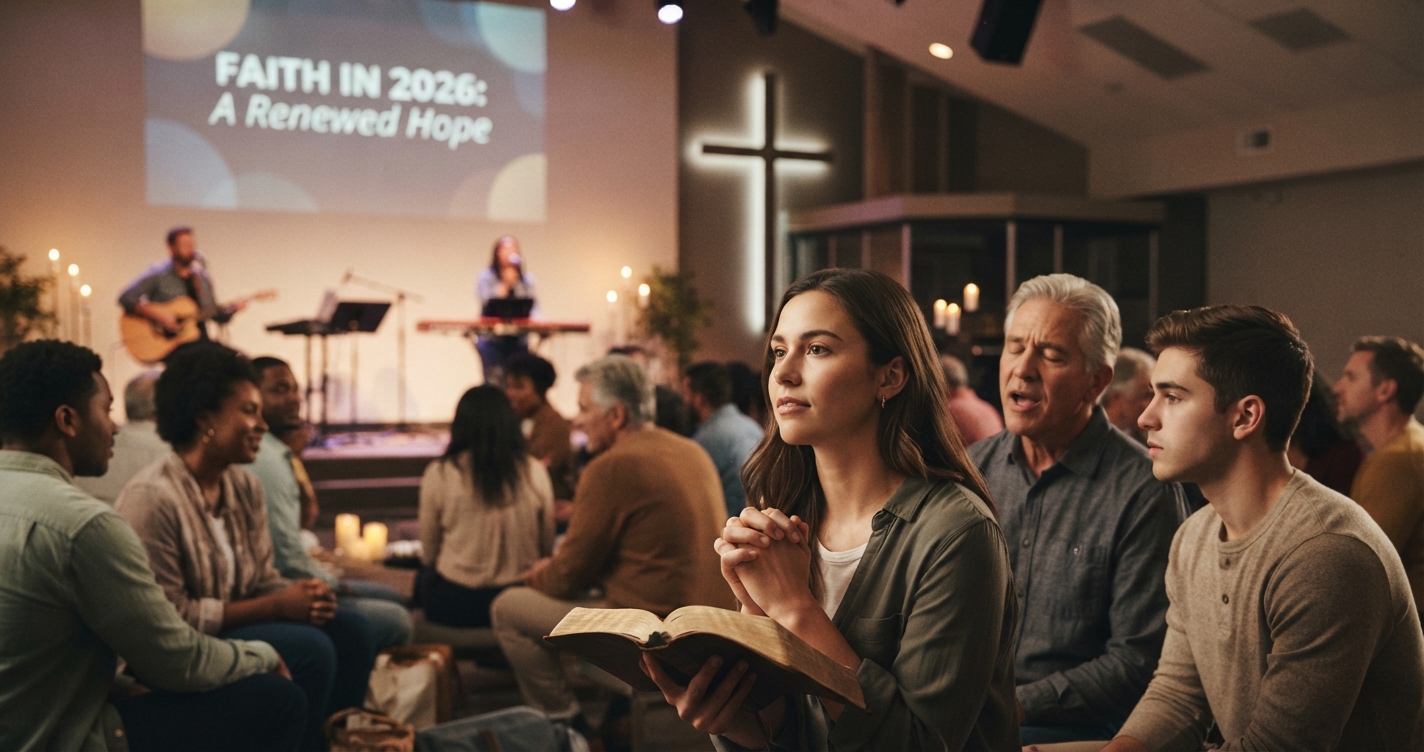
Faith communities offer something rare: genuine belonging. A local church, a small prayer group, or an online Bible study creates a space where people are known by name. This kind of community is priceless in 2026.
If you are looking for a place to start, exploring practical Christian living can help you understand how faith integrates into daily relationships and routines.
Consider the difference:
- Social media: Hundreds of “friends” but no one to call in a crisis.
- Faith community: A dozen people who pray for you, feed you, and show up when life falls apart.
This is not theoretical. It is happening in neighborhoods and online groups every week.
Science, Uncertainty, and the Limits of Reason
For a long time, the narrative was that science and faith were enemies. That is changing. Many scientists and thinkers now acknowledge that reason alone cannot explain consciousness, love, or the origin of existence.
A 2025 report from the Vatican discussed how modern philosophy is opening doors for a renewed dialogue between faith and reason. As people face global challenges like climate change and political instability, they realize that technical solutions are not enough. We need moral and spiritual grounding.
This does not mean rejecting science. It means recognizing that faith answers questions that science cannot even ask. That insight is leading many back to modern belief systems that honor both intellect and mystery.
The Role of Digital Discipleship
Ironically, technology is helping fuel this revival. Podcasts, devotion apps, and online churches have made faith accessible to anyone with an internet connection. You can join a prayer group on a Tuesday night without leaving your living room.
Many people start by listening to a sermon while commuting or reading a short devotional during lunch. Over time, that small seed grows into a genuine commitment. Digital tools are not replacing the church, but they are building a bridge to it.
For those interested in deepening their practice, studying Bible study resources online is a practical first step that thousands are taking in 2026.
Faith as a Response to Global Anxiety
The world feels unstable. Economic uncertainty, war, and environmental crises dominate headlines. Anxiety disorders are at an all-time high. People need a rock to stand on.
Faith provides an anchor. The belief that God is in control, that history has a purpose, and that suffering is not meaningless brings a deep sense of peace. This is not escapism. It is a tested coping mechanism supported by psychological research.
Prayer, in particular, has been shown to reduce stress and improve emotional regulation. Many people who never prayed before 2025 now have a daily practice of prayer and devotion. It changes how they face the day.
The Rise of “Unchurched” Believers
Not everyone returning to faith is joining a traditional congregation. A growing number of people identify as “spiritual but not religious” in a new way: they believe in God, read scripture, pray, but do not attend a physical church regularly.
This group includes former atheists, agnostics, and people who left organized religion years ago. They are finding their way back through online communities, podcasts, and small informal groups. This trend is reshaping what faith community looks like in practice.
For those curious about what the future holds, some are turning to bible prophecy and end times studies, seeking to understand current events through a scriptural lens.
Comparing Then and Now: A Snapshot of the Shift
Let us look at a simple comparison of how faith engagement has changed between 2020 and 2026:
| Aspect | 2020 | 2026 |
|---|---|---|
| Online prayer groups | Rare, niche | Mainstream, hundreds of thousands active weekly |
| Young adults (18-30) identifying as “spiritual” | 27% | Estimated 45% |
| Bible reading via apps | Growing | Dominant method for 60% of new believers |
| Attitude toward faith in public | Private, often hidden | Discuss openly, especially among peers |
The data is clear: something is shifting beneath the surface of our culture.
What This Means for You
If you are reading this and feeling a pull toward faith, you are not alone. Millions are walking the same path. You do not need to have all the answers. You do not need to be perfect.
Start small. Read one passage of scripture. Say a simple prayer. Find one person who shares your curiosity. The journey of rediscovering faith in 2026 is not about perfection; it is about direction.
For those who prefer a structured approach, many people have found that tools designed to sharpen focus and reduce mental clutter also support a quieter mind for prayer and reflection. If you struggle to quiet your thoughts, check out The Genius Wave — it is a digital audio program that many users report helps them achieve a calmer, more focused mindset, which can complement a devotional life.
Frequently Asked Questions
1. Why are people rediscovering faith in 2026 specifically?
Several factors converged: post-pandemic loneliness, AI anxiety, global uncertainty, and a renewed appreciation for community and meaning beyond material goods.
2. Do I need to belong to a specific religion?
No. While Christianity is experiencing a notable revival, people are returning to many traditions. The key is sincerity and a search for truth.
3. Can I explore faith without going to a church?
Absolutely. Many people start online, through podcasts, apps, or virtual groups. However, in-person community remains valuable for long-term growth.
4. Is this just a trend that will fade?
It is possible that part of it is cultural momentum, but the depth of commitment seen in many new believers suggests it is more than a passing fad.
5. How do I start if I am skeptical?
Begin with curiosity. Read the Gospels or other sacred texts with an open mind. Ask honest questions. Faith grows best in an environment of honesty.
6. What is the difference between “faith” and “religion”?
Faith is personal trust in God. Religion is the organized expression of that trust. Both have value. Many people are rediscovering that they need both.
7. Can science coexist with faith?
Yes. Many leading scientists are people of faith. They see no contradiction. Science explains the “how”; faith addresses the “why.”
8. Where can I find a trustworthy community?
Look for a church or group that emphasizes love, humility, and scripture. Check their statements of belief. Talk to people who attend. Trust your instincts.
Conclusion: The Door Is Open
Rediscovering faith in 2026 is not about escaping reality. It is about facing reality with a new foundation. Millions are realizing that they were never truly satisfied by success, entertainment, or convenience alone.
The door is open. The invitation stands. Whether you are a skeptic, a seeker, or someone coming home after a long time away, there is room for you in this movement. Faith is not the past. It is the future.