The Most Important End Times Scriptures Every Christian Should Read
Let’s be honest: the end times can feel overwhelming. Between confusing visions, strange numbers, and conflicting interpretations, many Christians simply avoid the topic. But here’s the truth: God gave us these end times scriptures not to scare us, but to prepare and comfort us.
If you want to understand what the Bible really says about the future, you don’t need a theology degree. You just need to know which passages to read and how to connect them. This guide walks you through the most important prophecies from both the Old and New Testaments.
Whether you’re a new believer or a seasoned student of Bible prophecy, these verses will ground your faith and give you clarity about what’s coming. Let’s dive into the Scriptures that matter most.
Why the End Times Matter for Your Faith Today
Many people think end times prophecy is only about the distant future. But Jesus Himself said otherwise. In Matthew 24, He urged His disciples to “stay awake” and be ready. That’s not a suggestion — it’s a command.
Understanding end times scriptures transforms how you live right now. When you know that Christ is coming back, your priorities shift. You start caring less about worldly success and more about eternal impact.
For example, the apostle Peter wrote that knowing the end is near should make us “holy and godly” (2 Peter 3:11). That’s practical, everyday change. Prophecy isn’t just information — it’s motivation for a deeper walk with God.
If you’re looking for more guidance on how to grow spiritually during uncertain times, check out our Christian living articles for daily encouragement.
Daniel’s Prophecies: The Foundation of End Times Understanding
You can’t study the end times without starting in the book of Daniel. Written over 500 years before Christ, Daniel’s visions lay the groundwork for everything that follows in Revelation.
Daniel 2 describes Nebuchadnezzar’s dream of a statue made of four metals. Each metal represents a world empire: Babylon, Medo-Persia, Greece, and Rome. The stone that destroys the statue is Christ’s eternal kingdom. This is the first clear timeline of world history leading to the end.
Daniel 7 gives a similar vision with four beasts. These aren’t random creatures — they represent the same empires. But Daniel 7 adds something crucial: the “Ancient of Days” (God) sits in judgment, and the “Son of Man” (Jesus) receives an everlasting kingdom.
Then there’s Daniel 9, the famous “seventy weeks” prophecy. It predicts the exact timing of Jesus’ first coming and points to a future seven-year period of tribulation. This passage is essential for anyone serious about Bible prophecy.
The Olivet Discourse: Jesus’ Own End Times Teaching
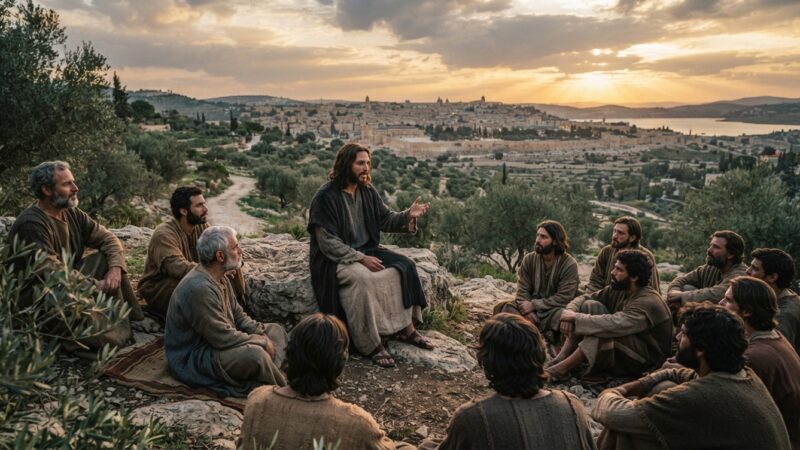
In Matthew 24, Mark 13, and Luke 21, Jesus gives His most detailed teaching about the end times. This is called the Olivet Discourse because He spoke it on the Mount of Olives, just outside Jerusalem.
Jesus starts by warning about deception. “Many will come in my name,” He says. That’s a sobering reminder: not everyone who claims to speak for God actually does. Then He lists the signs of the end times: wars, famines, earthquakes, and persecution.
But here’s what many miss. Jesus says these signs are “the beginning of birth pains.” Like labor contractions, they get more frequent and intense over time. That changes how we read current events.
Key takeaway: Jesus emphasizes readiness over date-setting. He says no one knows the day or hour — only the Father. So instead of predicting, we prepare. This is a core principle for every Christian studying end times scriptures.
The Book of Revelation: A Guided Tour of What’s Coming
Revelation is the most famous end times book — and the most misunderstood. Written by the apostle John while exiled on Patmos, it’s a vision of heaven, judgment, and ultimate victory.
Chapters 4 and 5 give us a glimpse of God’s throne room. The worship is intense: angels, elders, and living creatures cry “Holy, holy, holy.” This isn’t just poetic imagery; it shows that God is sovereign over everything, including history.
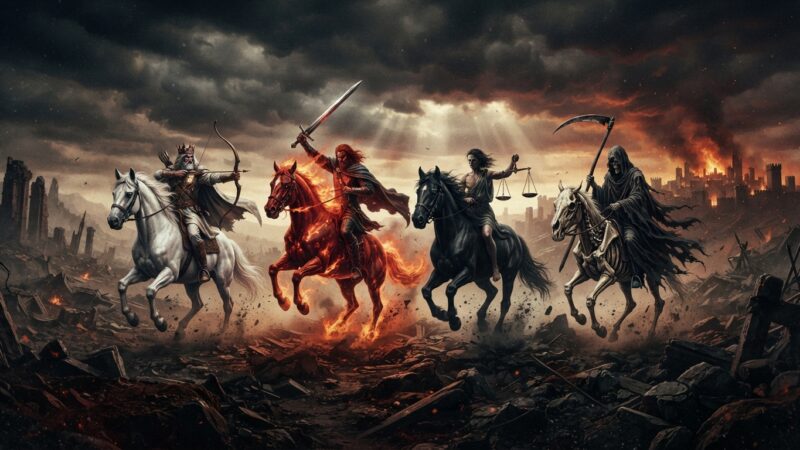
Chapters 6 through 19 describe the Tribulation period. The seven seals, seven trumpets, and seven bowls represent escalating judgments. Each series ends with a call to repentance. It’s heavy reading, but it reveals God’s justice and mercy at the same time.
Revelation 20 introduces the Millennium, a thousand-year reign of Christ on earth. And Revelation 21-22 paints the final picture: a new heaven and a new earth, where God dwells with His people forever. No more pain, no more tears.
For a deeper look at these themes, explore our Bible prophecy and end times section with more detailed studies.
Key Passages From Paul’s Letters on the Rapture and Resurrection
The apostle Paul wrote extensively about the end times, especially in his letters to the Thessalonians and Corinthians. These passages clarify what happens to believers when Christ returns.
1 Thessalonians 4:13-18 is the classic “rapture” passage. Paul says believers who have died will rise first, then those still alive will be “caught up together” to meet the Lord in the air. The word “caught up” in Latin is rapiemur, which gives us the term rapture.
Paul follows up in 2 Thessalonians 2, warning about the “man of lawlessness” — the Antichrist. He says this figure will exalt himself in God’s temple, claiming to be God. But Paul reassures believers: the Lord will destroy him with the breath of His mouth.
In 1 Corinthians 15, Paul explains the resurrection body. It’s not the same physical body we have now. It’s imperishable, glorious, and powerful. This gives us Christian hope even when we face death or loss.
Old Testament Prophets Who Saw the End Times
Daniel isn’t the only Old Testament prophet who spoke about the last days. Isaiah, Ezekiel, Zechariah, and Joel all contributed essential pieces to the prophetic puzzle.
Isaiah 2:2-4 describes the last days when nations will stream to the mountain of the Lord and beat their swords into plowshares. This points to a future era of global peace under Messiah’s rule.
Ezekiel 38-39 is the famous “Gog and Magog” prophecy. It describes a coalition of nations attacking Israel in the end times, only to be supernaturally destroyed by God. Many scholars believe this happens just before or during the Tribulation.
Zechariah 12-14 focuses on Jerusalem’s final siege and the moment when “they will look on Me whom they have pierced.” This is a direct prophecy of Jesus’ second coming and Israel’s national repentance.
Joel 2:28-32 promises the outpouring of the Holy Spirit in the last days — a prophecy Peter quoted at Pentecost. Joel also describes cosmic signs: blood, fire, and smoke before the great day of the Lord.
Together, these prophets paint a consistent picture. Here’s a quick summary of their main themes:
- Isaiah: Peace among nations in Messiah’s kingdom
- Ezekiel: A final war against Israel and God’s intervention
- Zechariah: Jerusalem’s deliverance and the return of the pierced One
- Joel: The Spirit’s outpouring and cosmic signs before judgment
Practical Table: Comparing Key End Times Events Across Scripture
To help you see how these end times scriptures connect, here’s a simple comparison table. It shows the main events and where to find them in the Bible.
| Event | Key Passage | What It Describes |
|---|---|---|
| The Rapture | 1 Thessalonians 4:13-18 | Believers caught up to meet Christ |
| The Tribulation | Revelation 6-19 | Seven years of judgment on earth |
| The Antichrist | 2 Thessalonians 2, Revelation 13 | The lawless one who deceives the world |
| Christ’s Second Coming | Revelation 19:11-21 | Jesus returns as King and Judge |
| The Millennial Kingdom | Revelation 20:1-6 | Christ reigns for 1,000 years on earth |
| The Final Judgment | Revelation 20:11-15 | Great white throne judgment of the lost |
| New Heaven and New Earth | Revelation 21-22 | Eternal state with God dwelling among His people |
How to Study End Times Scriptures Without Getting Confused
Let’s face it: prophecy can be confusing. Different Christians have different views about the timing of the rapture, the nature of the Millennium, and the role of Israel. It’s easy to get lost in debates.
Here’s my advice: start with what’s clear. Every major Christian tradition agrees on core truths: Jesus is coming back, the dead will be raised, and believers will live forever with God. Build your foundation on those certainties.
Use a simple study method. Read one passage at a time. Ask three questions: What does this tell me about God? What does this tell me about humanity? How should I respond? That keeps you focused on application, not speculation.
Also, compare Scripture with Scripture. The Bible never contradicts itself. If a passage seems confusing, look for parallel verses. For example, Daniel 7 and Revelation 13 both describe a beast with ten horns. Reading them together gives a fuller picture.
For daily Bible reading habits that strengthen your understanding, visit our Bible study resources for practical tips.
Frequently Asked Questions About End Times Scriptures
What is the most important end times scripture?
Many scholars point to Revelation 22:20, where Jesus says, “Surely I am coming quickly.” John responds, “Amen. Even so, come, Lord Jesus!” It captures the heart of end times scriptures: not fear, but eager anticipation.
How do end times scriptures help my daily life?
They shift your focus from temporary troubles to eternal realities. When you know how the story ends, anxiety loses its grip. You also gain motivation to share your faith and live with integrity.
Are end times scriptures literal or symbolic?
It’s both. Some passages describe literal events (like Christ’s return). Others use symbolic language (like beasts and horns) to represent real people and nations. Context and cross-referencing help you discern which is which.
Does every Christian need to study prophecy?
Not everyone is called to be a prophecy expert, but every Christian should know the basics. Jesus and the apostles repeatedly urged believers to be watchful and ready. Ignoring prophecy means ignoring God’s warnings and promises.
What’s the difference between the rapture and the second coming?
The rapture (1 Thessalonians 4) is Christ coming for His church to take them to heaven. The second coming (Revelation 19) is Christ coming with His church to establish His kingdom on earth. Many see them as two separate events.
Can I trust modern interpretations of end times prophecy?
With caution. Always measure any teaching against Scripture itself. Even well-known teachers can be wrong. Use resources from trusted ministries, but let the Bible be your final authority. For deeper study of God’s character through prophecy, explore our faith and inspiration content.
Where should I start reading in the Bible about the end times?
Start with Matthew 24 to hear Jesus’ own words. Then read Daniel 7-12 for the Old Testament foundation. Finally, work through Revelation slowly, chapter by chapter. Don’t rush — let each passage sink in.
How do I stay hopeful when end times scriptures seem frightening?
Always remember: every prophecy of judgment is balanced with a promise of redemption. The final chapters of Revelation are not about destruction — they’re about a wedding feast, a garden city, and God wiping every tear. That’s the real ending.
Conclusion: Living With Confidence in Light of Prophecy
The end times are not something to dread. They are something to anticipate with joy and purpose. God gave us these end times scriptures so we wouldn’t be caught off guard or overwhelmed by fear.
Think about it: you already know the final outcome. Jesus wins. Sin and death are defeated. God’s people live forever in peace. That changes everything about how you face today’s challenges.
As you continue studying, keep a humble heart. None of us has perfect understanding. But we all have access to the same Holy Spirit who inspired these prophecies. Ask Him to guide your reading and give you wisdom.
If you found this helpful, consider using resources that sharpen your mind and spirit. For example, The Genius Wave is a tool designed to support mental clarity and focus — helpful when studying complex prophetic passages. It’s like having a little extra help staying sharp as you dig into God’s Word.
Finally, don’t study alone. Join a small group, share insights with friends, and encourage one another with these truths. The end times aren’t just about what’s coming — they’re about how we live together in faith right now. Stay watchful, stay hopeful, and keep your eyes on Jesus.
For more on applying these truths to your prayer life, visit our prayer and devotion section for daily encouragement.