Are We Living in the Last Days According to Scripture?
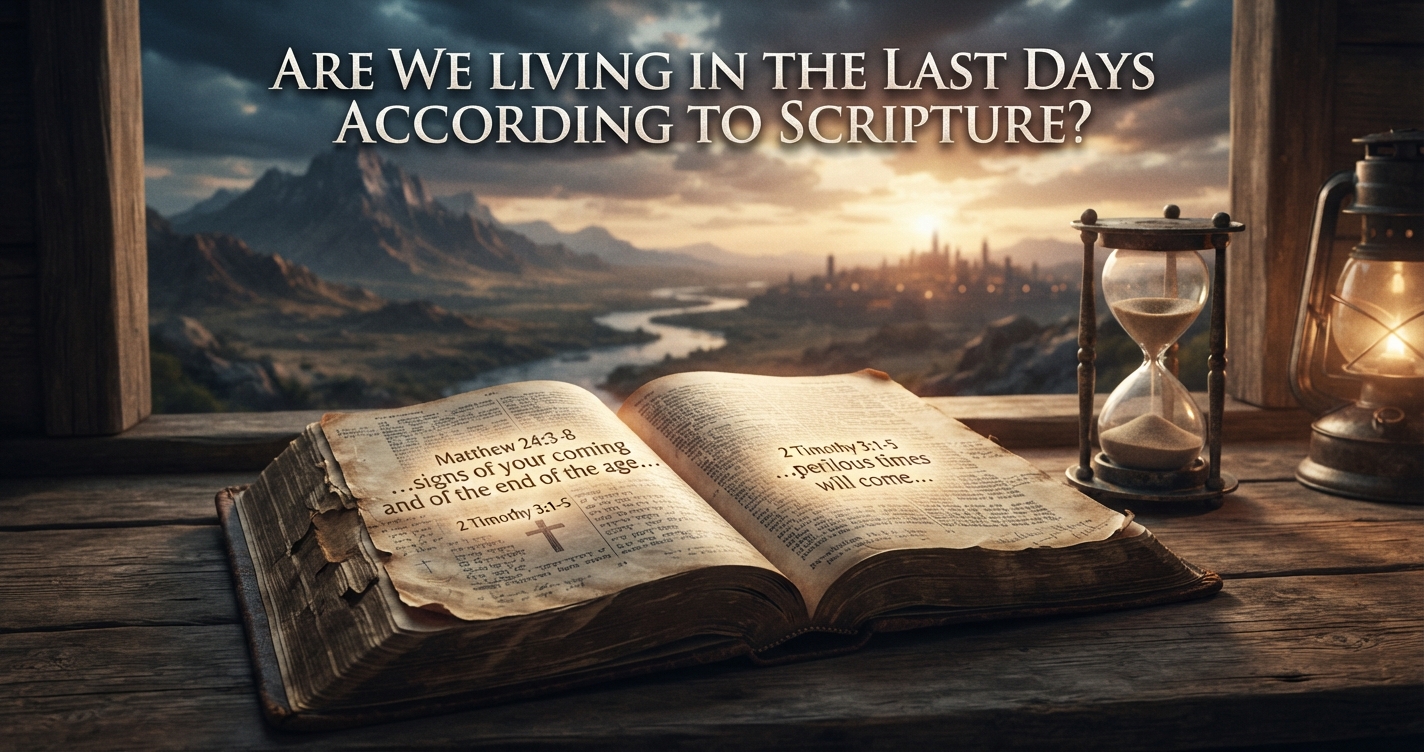
Whenever headlines scream about wars, natural disasters, or political chaos, many Christians ask the same question: Are we living in the last days according to Scripture? It’s an ancient question, but one that feels urgent in every generation. Whether you’re a longtime believer or just curious about biblical prophecy, this topic touches the core of Christian hope and expectation.
Scripture gives us clues — not exact dates, but clear signs. The Bible describes a world that grows increasingly restless, morally confused, and spiritually hungry. And if you look around, it’s hard not to notice how many of those signs seem to be unfolding right now.
In this article, we’ll walk through what the Bible actually says about the last days, how Christians have interpreted these passages through history, and what it means for your faith today. No fear-mongering, just honest, biblical insight.
What Does the Bible Mean by “Last Days”?
The phrase “last days” appears throughout both the Old and New Testaments. In the Old Testament, prophets like Isaiah and Joel spoke of “the latter days” as a time of both judgment and restoration. In the New Testament, the apostles made it clear that with Jesus’ resurrection, the “last days” had already begun.
The author of Hebrews writes, “In these last days, God has spoken to us by His Son” (Hebrews 1:2). That’s a big deal. It means the last days according to Scripture started roughly 2,000 years ago with the first coming of Christ. We are living in the period between His first and second coming — what theologians call the “already but not yet.”
So technically, every generation since Pentecost has been in the last days. But Scripture also points to a specific climactic period — often called the tribulation — that will precede Jesus’ physical return. That’s where most of the debate centers today.
Key Biblical Signs of the End Times
Jesus Himself gave a list of signs in Matthew 24, Mark 13, and Luke 21. These aren’t obscure teachings; they’re from the mouth of Christ. And they paint a picture of a world under pressure.
- Wars and rumors of wars: Nations rising against nations, regional conflicts escalating.
- Famines and earthquakes: Widespread food shortages and natural disasters “in various places.”
- Persecution of believers: Christians being hated, arrested, and martyred for their faith.
- Lawlessness and lovelessness: Morality breaking down; people becoming cold-hearted and self-centered.
- False prophets and deceivers: Many claiming to be the Messiah, leading people astray.
- The gospel preached to all nations: A global witness before the end comes.
These signs aren’t just one-time events — they’re trends that intensify as history moves forward. If you’ve watched the news lately, it’s hard to deny we’re seeing these patterns accelerate.
Are We Seeing the Rise of the Antichrist?
One of the most discussed figures in end times prophecy is the Antichrist. The Bible describes him as a charismatic world leader who will deceive many and establish a one-world system of government, economy, and religion (Revelation 13; 2 Thessalonians 2).
People love to speculate about who this might be — politicians, tech moguls, even religious leaders. But Scripture warns us not to get fixated on names or dates. The Apostle John actually said that the “spirit of the antichrist” is already at work in the world (1 John 4:3).
What matters more is recognizing the spirit behind it: a system that opposes Christ, exalts human power, and demands absolute allegiance. That could show up in many forms — from global surveillance currencies to ideologies that suppress Christian truth.
For deeper study on how these patterns connect to your daily walk, check out our Bible study resources that break down prophetic passages verse by verse.
What About the Book of Revelation?
The Book of Revelation is often seen as the end-times manual, but it’s more like a letter of hope. Written to persecuted Christians, it uses vivid symbolism to show that God is sovereign over history. The four horsemen, the seals, trumpets, and bowls — they all describe judgment, but also the ultimate victory of Christ.
Many people get confused by the timeline. Some believe in a pre-tribulation rapture (Christians taken before the tribulation), others in a post-tribulation gathering. The key point Revelation makes is this: no matter what happens, those who put their faith in Jesus will not face final condemnation.
If you want to understand Revelation better, it helps to read it alongside Old Testament prophecy, especially Daniel and Ezekiel. They use similar imagery and themes. And always remember: Revelation ends not with destruction, but with a new heaven and a new earth.
Comparing Key End Times Views
Christians hold different interpretations about the sequence of the last days. Here’s a simple comparison of the three main views:
| View | Key Belief | Timeline |
|---|---|---|
| Premillennialism | Christ returns before a literal 1,000-year reign | Rapture → Tribulation → Second Coming → Millennium |
| Amillennialism | The millennium is symbolic, representing the church age | Second Coming → Final Judgment → New Creation |
| Postmillennialism | Christ returns after a golden age of Christian influence | Gospel spreads → Millennium → Second Coming |
Each view has strong biblical support and thoughtful defenders. The point isn’t to pick the right “team,” but to stay faithful and watchful. As Jesus said, “Therefore keep watch, because you do not know on what day your Lord will come” (Matthew 24:42).
For a broader look at how prophecy shapes Christian living, explore our articles on practical faith in uncertain times.
How Should Christians Prepare for the Last Days?
It’s easy to get caught up in fear or speculation, but the Bible never calls us to panic. Instead, it gives clear instructions for those who believe we are in the last days. First, stay rooted in Scripture. Prophecy isn’t meant to scare you — it’s meant to anchor you.
Second, live with integrity. The Apostle Peter wrote, “Since everything will be destroyed in this way, what kind of people ought you to be? You ought to live holy and godly lives” (2 Peter 3:11). That’s practical: be honest, generous, and forgiving.
Third, share the gospel. Jesus said the end will come after the gospel is preached to all nations (Matthew 24:14). That puts the mission in our hands. Every conversation, every act of kindness, every prayer for the lost matters.
And while you’re preparing spiritually, don’t neglect your mind and body. If you’re looking for ways to stay mentally sharp and focused during these stressful times, confira esta opção for a tool designed to support a sharper, healthier mind — a small but practical step in staying alert and clear-headed.
Does Every Christian Need to Know the Exact Date?
Absolutely not. In fact, Jesus explicitly said no one knows the day or hour — not even the angels, but only the Father (Matthew 24:36). Anyone who claims to have cracked the code on a specific date is contradicting Christ Himself.
What we are called to do is be ready. That means living each day with purpose, loving God, and loving our neighbor. The early Christians thought Jesus could return in their lifetime, and they were right to be hopeful — even if they were wrong about the timing.
The same applies today. Whether we see the end in our lifetime or not, our job is to be faithful stewards of the time we have. Bible prophecy today isn’t about a calendar — it’s about a relationship.
To strengthen that relationship, dive into our prayer and devotion resources that help you stay connected to God daily.
Frequently Asked Questions
1. Are we living in the last days according to Scripture right now?
Yes and no. Theologically, we’ve been in the last days since Jesus’ resurrection. But many believe the final, intense period of tribulation is drawing closer based on the convergence of biblical signs.
2. What is the biggest sign that the end is near?
Jesus highlighted the gospel being preached to all nations as a key sign before the end (Matthew 24:14). Global mission efforts have accelerated like never before in history.
3. Is the Antichrist alive today?
We don’t know. The Bible says he will be revealed in God’s timing. But the spirit of antichrist — deception and opposition to Christ — is already active worldwide.
4. What does Revelation say about the end of the world?
Revelation describes a final judgment, the defeat of Satan, and the creation of a new heaven and new earth where God dwells with His people forever.
5. Will Christians go through the tribulation?
This depends on your theological view. Pre-tribulation believers say the church will be raptured before it; post-tribulation believers say Christians will go through it but be protected. Both agree God will preserve His people.
6. How can I know which end-times interpretation is correct?
Study the Bible prayerfully, read multiple viewpoints, and focus on the core message: Jesus will return, justice will prevail, and we must be ready. Don’t let secondary debates divide you from other believers.
7. Does the Bible mention Israel’s role in the last days?
Yes. Many prophecies involve the nation of Israel, including the rebuilding of the temple and a future turning to Christ (Romans 11). The modern state of Israel is a significant topic in end times prophecy discussions.
Conclusion
So, are we living in the last days according to Scripture? In the broad sense, yes — every generation since Christ has been. But the intensity, the global scale of events, and the fulfillment of specific signs make this moment unique. Wars, natural disasters, moral decline, and unprecedented gospel access all point toward the climax of history.
Yet the Bible’s goal isn’t to make us terrified. It’s to make us ready. Live with hope, stay grounded in truth, and keep your eyes on Jesus. The end of the story is already written, and it’s beautiful: “He who testifies to these things says, ‘Yes, I am coming soon.’ Amen. Come, Lord Jesus” (Revelation 22:20).
For more encouragement in your walk, visit our faith and inspiration section to find daily strength for the journey ahead.