What Does the Bible Say About the End Times in 2026?
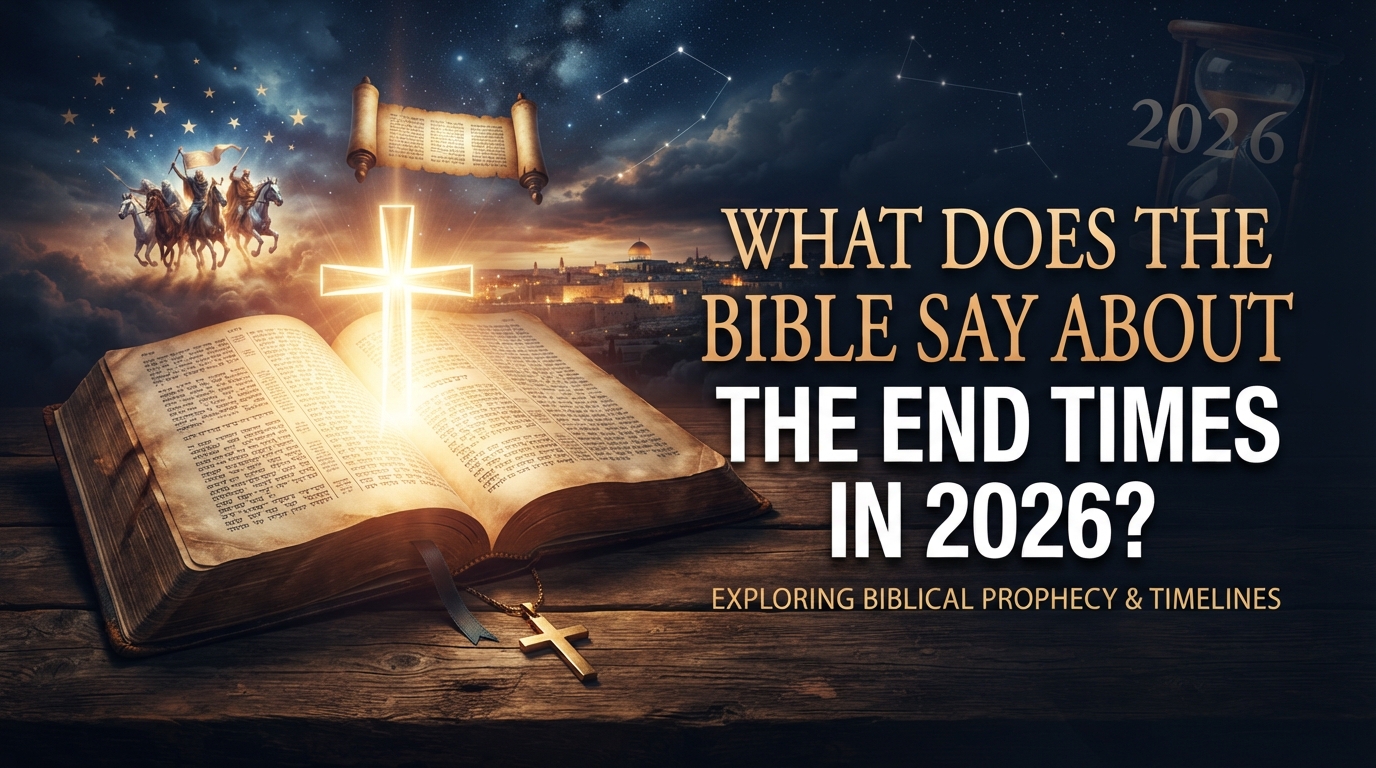
Every few years, a new date for the end of the world circulates online. Lately, some have been asking: what does the Bible say about the end times in 2026? It’s a fair question, especially when you see headlines linking biblical numbers to modern calendars. But before you mark your calendar, let’s take a honest look at what Scripture actually teaches.
The short answer is that the Bible never gives a specific year — including 2026 — for the return of Christ or the final judgment. In fact, Jesus explicitly said we wouldn’t know. But that doesn’t mean the topic is off-limits. Understanding Bible prophecy end times themes can help us live with more purpose, hope, and readiness.
Does the Bible Mention 2026 Specifically?
No, the Bible does not mention the year 2026. The modern Gregorian calendar didn’t exist when the biblical texts were written. So any connection between 2026 and prophecy comes from speculation, not scripture.
Some people point to patterns like the 70-week prophecy in Daniel 9 or the 1,000-year reign in Revelation 20. They try to calculate dates by adding prophetic “days” into future years. But these interpretations are highly debated among theologians and often contradict each other.
The safest approach is to remember that God’s timing is not our timing. As 2 Peter 3:8 reminds us, “With the Lord a day is like a thousand years, and a thousand years are like a day.”
What Jesus Actually Said About Knowing the Date
If you want to know what does the Bible say about the end times in 2026, start with Jesus’ own words. In Matthew 24:36, He stated clearly: “But about that day or hour no one knows, not even the angels in heaven, nor the Son, but only the Father.”
That’s about as direct as it gets. Jesus Himself — while living on earth as a man — didn’t know the exact date of His return. If He didn’t know, no modern teacher or YouTube prophecy channel is going to figure it out.
So why do predictions keep appearing? Because humans naturally want certainty. But the Christian life is about trusting God’s timing, not cracking a code.
Signs of the End Times in Scripture
While the Bible doesn’t give a date, it does describe signs of the end that would characterize the last days. These include wars, famines, earthquakes, betrayal, false prophets, and a general increase in lawlessness (Matthew 24:6-12).
Here are some key signs mentioned in the New Testament:
- Widespread deception and false messiahs
- Wars and rumors of wars
- Famines and pestilences in various places
- Persecution of believers
- The gospel being preached to all nations
- A great apostasy or falling away from the faith
Does this sound like 2026 specifically? Not really. These signs have been present in some form throughout church history. Every generation has faced war, famine, and persecution. What changes is the scale and global connectivity — which modern technology amplifies.
For a deeper study of these passages, you can explore our collection on Bible study resources.
The Danger of Date Setting in Christianity
Date setting is not a new problem. Early Christians thought Jesus would return within their lifetime. In the 19th century, the Millerites predicted 1844. In 2011, Harold Camping famously predicted the rapture for October 21st.
Every failed prediction does real damage. It causes believers to lose credibility, creates unnecessary fear, and distracts from the actual mission of the church — loving God and serving others.
The Bible warns against this directly. In Matthew 24:23-26, Jesus says, “If anyone says to you, ‘Look, here is the Messiah!’ or, ‘There he is!’ do not believe it.” That includes date setters who claim inside knowledge.
How Should Christians Live in Light of the End Times?
Instead of obsessing over 2026, the Bible gives a much clearer instruction: live faithfully today. Jesus told several parables about being ready — the ten virgins, the faithful servant, the talents. All of them emphasize active waiting, not passive guessing.
Practical ways to live ready include:
- Staying rooted in prayer and scripture
- Building genuine community with other believers
- Sharing your faith with others
- Serving those in need
- Repenting quickly when you fall into sin
These actions are relevant whether Christ returns in 2026 or in 2126. If you want to grow in this area, consider looking at our prayer and devotion section for daily habits that keep your focus on eternity.
Understanding the End Times Timeline
The Bible presents a broad end times timeline, but it’s not presented as a chronological checklist. Major events include: the rapture (1 Thessalonians 4:16-17), the tribulation (Revelation 6-19), the millennial reign of Christ (Revelation 20), the final judgment (Revelation 20:11-15), and the new heaven and new earth (Revelation 21-22).
Different Christian traditions arrange these events differently:
| View | Order of Events | Key Belief |
|---|---|---|
| Premillennialism | Rapture, Tribulation, Millennial Reign, Final Judgment | Christ returns before a literal 1,000-year reign |
| Postmillennialism | Gospel spreads, then Christ returns after a golden age | Kingdom established through the church |
| Amillennialism | Millennium is symbolic for the church age | Christ reigns spiritually now |
None of these views assign a specific year like 2026 to the events. They all agree that the exact timing is unknown.
The Role of Israel in End Times Prophecy
One reason some look to 2026 involves the modern state of Israel. Prophecies in Ezekiel 37-39 talk about the restoration of Israel and a future invasion. Since Israel became a nation in 1948, some see a countdown based on biblical generational timelines.
For example, some point to Psalm 90:10 (“Seventy years… eighty if we have the strength”) and add 70 or 80 years to 1948. That lands around 2018 to 2028 — and 2026 falls within that range.
But this is guesswork, not exegesis. The text doesn’t say to calculate the end of the world that way. Israel’s existence is significant in prophecy, but it doesn’t pin a date on the calendar.
For more on how current events align with biblical predictions, check out our Bible prophecy and end times articles.
What About Dreams, Visions, and Modern Prophecy?
In recent years, some Christian leaders claimed to have received visions about 2026. They describe seasons of shaking, revival, or judgment. While God can certainly speak through dreams (Acts 2:17), every personal revelation must be tested against Scripture.
The test is simple: if a prophecy contradicts what the Bible clearly says — like setting a specific date — it fails the test. 1 Thessalonians 5:21 says, “Test them all; hold on to what is good.” Let God’s written Word be your anchor.
FAQ: What Does the Bible Say About the End Times in 2026?
1. Is 2026 mentioned anywhere in the Bible?
No. The Bible does not mention any modern calendar year, including 2026.
2. Why do some people think the end times will happen in 2026?
They base it on symbolic interpretations of numbers (like 6 representing imperfection), generational timelines from 1948, or personal visions. None of these are biblically definitive.
3. Does the Bible give any numerical clues about the end times?
Numbers like 7, 10, 1,000, and 1,260 appear in prophecy (Revelation). But they are symbolic, not meant to calculate precise years.
4. What is a safe way to think about the future according to the Bible?
James 4:14-15 says we should say, “If it is the Lord’s will, we will live and do this or that.” Trust God’s plan, not predictions.
5. Should I be afraid of the end times?
No. For believers, the end times mean final redemption and being with Christ. 1 John 4:18 says perfect love drives out fear.
6. How should I prepare for the end times practically?
Stay faithful in prayer, study Scripture, live morally, and share the gospel. If you want to sharpen your mind for these deep topics, some find that tools like The Genius Wave audio tracks help with focus during Bible study and prayer time — worth checking out if you struggle with distractions.
7. Will everyone know when Jesus returns?
Yes. Revelation 1:7 says “every eye will see him.” His return will be visible and unmistakable — no special interpretation needed.
8. What if I’ve been scared by end times predictions?
Bring that fear to God in prayer. Read the promises in Revelation 21:4 about no more death or pain. Trust that God holds your future securely.
Conclusion: Focus on Faith, Not Dates
So, what does the Bible say about the end times in 2026? It says nothing specific about that year — and that’s by design. God wants us to live in daily dependence on Him, not in anxious calculation of future dates.
Instead of searching for hidden codes, let the biblical message transform how you live today. Stay alert. Stay faithful. And let your hope rest in Jesus Christ, who promised to return — but didn’t give us a calendar.
If you want to grow in this area of faith, you can also explore our faith and inspiration articles for encouragement in your daily walk.