How to Make Bible Study a Daily Habit

Let’s be honest: you want to spend more time in the Bible, but life keeps getting in the way. The alarm goes off, the kids need breakfast, emails pile up, and by the time you remember your Bible, you’re already exhausted. You’re not alone. Most Christians struggle with consistency when it comes to how to make Bible study a daily habit.
But here’s the good news: building a daily Bible study routine is simpler than you think. It doesn’t require a theology degree or a two-hour quiet time. It just takes a few intentional shifts in your mindset and schedule. In this guide, I’ll share practical strategies I’ve developed over years of working with believers who wanted to go from sporadic reading to daily feasting on God’s Word.
Think of this as a roadmap. By the end of this article, you’ll have a clear, actionable plan to make scripture reading a natural part of your day—like brushing your teeth or drinking your morning coffee.
Start Small to Build Momentum
One of the biggest mistakes people make is trying to read an entire book of the Bible in one sitting. That’s not sustainable. If you want to build a daily Bible study routine, start with just five to ten minutes a day. Seriously. Even a single verse, chewed on slowly, can transform your day.
The key is to remove the pressure. When you aim too high, you burn out fast. Instead, set a low bar. Open your Bible, read one chapter, and ask one question: “What does this teach me about God today?” That’s it. Over time, your appetite will grow naturally. You’ll find yourself wanting to read longer—but let your desire lead, not your guilt.
I once worked with a mom of three who thought she couldn’t study the Bible at all. She started with just two verses during her toddler’s nap time. Within a month, she was reading a full chapter. The small start created momentum. Consistency beats intensity every time.
Anchor Bible Study to an Existing Habit
Do you already have a daily routine? Maybe you brush your teeth every morning or drink a cup of coffee after lunch. The easiest way to learn how to make Bible study a daily habit is to attach it to something you already do without thinking. This is called habit stacking.
For example: “After I pour my coffee, I will read one chapter of the Gospels.” Or “Before I check my phone in the evening, I will read one Proverb.” The anchor habit triggers the new behavior. Over time, you won’t even need to remember to study—it will become automatic.
Here are a few anchor ideas that work well:
- Right after you brush your teeth in the morning
- While your kids eat breakfast
- During a lunch break at work
- Right before you go to bed (keep your Bible on your pillow)
- After your morning workout or shower
This technique is backed by behavioral psychology, but it’s also simply wise. God designed us as creatures of rhythm. Use that rhythm for your spiritual growth. For more ideas on building consistent spiritual disciplines, explore this guide on Christian living.
Choose a Plan That Fits Your Life
Reading the Bible without a plan is like taking a road trip without a map. You’ll wander around and eventually give up. The best Bible study tips for beginners always include choosing a reading plan that matches your season of life.
If you’re short on time, try a chronological plan that covers key stories in small chunks. If you love deep reflection, try a topical plan on themes like grace, prayer, or prophecy. There are hundreds of free plans online, or you can even create your own.
I personally recommend starting with one of the Gospels—like Mark or Luke. They’re fast-paced, action-filled, and show Jesus in a very human way. Another great option is the book of Psalms, which is perfect for emotional connection and prayer. Need something more structured? Check out these resources in our Bible study category for more curated plans.
Many people also find that pairing their reading with a study tool helps. One product that many readers recommend is The Genius Wave, which supports a sharper, healthier mind—especially helpful for staying focused during longer study sessions. If you struggle with concentration, confira esta opção to enhance your mental clarity and retention.
Create a Space That Invites You In
Your environment matters. If you have to dig your Bible out from under a pile of laundry or fight for a quiet spot with a screaming toddler, you’re less likely to stick with it. Set up a simple, inviting space for your daily Bible study routine.
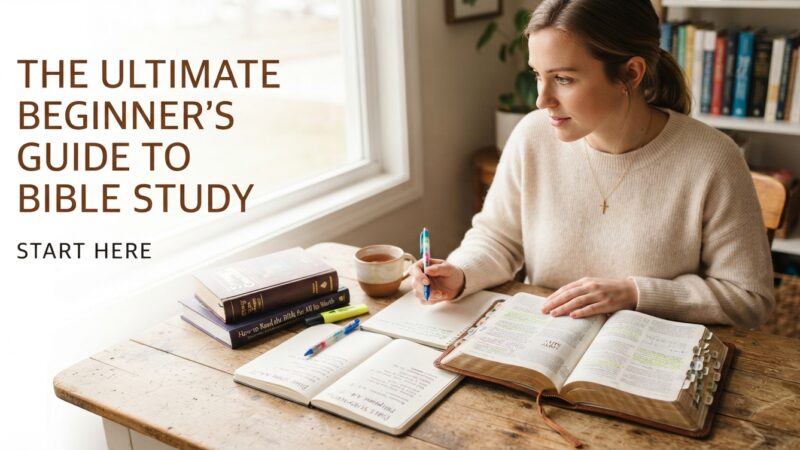
It doesn’t have to be a full home office. A corner of your couch, a specific chair, or even a spot on your porch can work. Keep your Bible, a pen, and a notebook there. Add a small candle or a plant if you like. The goal is to make that space feel like an invitation, not an obligation.
One reader told me she placed her Bible on her pillow every morning. By night, she couldn’t miss it. That small visual cue worked wonders. When your environment reminds you, your willpower doesn’t have to work as hard.
| Element | Why It Helps | Example |
|---|---|---|
| Designated spot | Creates a mental trigger | Armchair in the living room |
| Visible Bible | Visual cue to remind you | Open on your nightstand |
| Notebook + pen | Encourages active engagement | Journal insights and questions |
| Good lighting | Reduces eye strain and fatigue | Desk lamp or natural light |
Make It Interactive, Not Passive
Reading the Bible is good, but studying it is better. Passive reading means you scan the words and move on. Active study means you engage. Ask questions. Write down observations. Pray through the text. This is what turns a daily habit into a transformative practice.
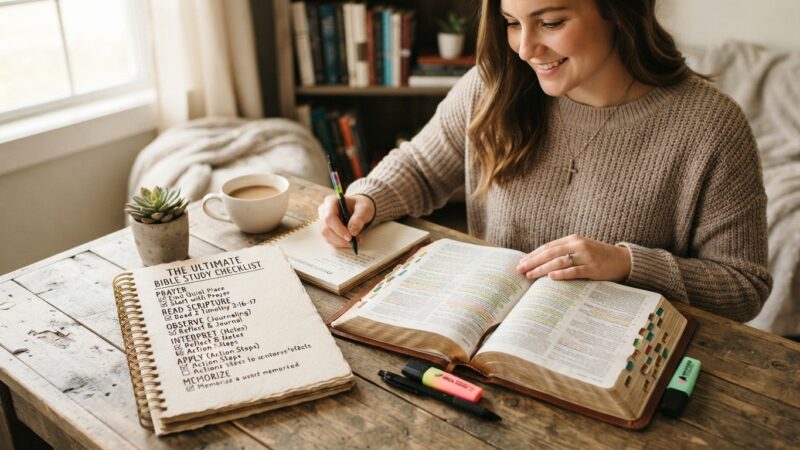
Try the SOAP method: Scripture, Observation, Application, Prayer. Write down one verse, what it means, how it applies to your life today, and then turn that into a quick prayer. It takes only ten minutes, but it changes everything.
When you make Bible study interactive, you also build spiritual growth habits that stick. You’re not just checking a box—you’re connecting with God. That connection is what keeps you coming back. Over time, the habit becomes a delight, not a duty. For more inspiration on deepening your prayer life alongside scripture, browse our prayer and devotion articles.
Overcome the “I Don’t Have Time” Lie
We all say it: “I don’t have time to study the Bible.” But the truth is, we make time for what we truly value. If you’re serious about learning how to make Bible study a daily habit, you need to name the real obstacle. It’s rarely time—it’s priority.
I challenge you to track your screen time for one week. You’ll likely find 30 minutes of social media scrolling that could be redirected to God’s Word. Even listening to an audio Bible during your commute counts. Don’t let perfectionism win. Five minutes of focused reading is infinitely better than zero minutes of guilt.
Another tactic is to use “micro-moments.” While you wait for water to boil, read two verses. While you stand in line at the store, open a Bible app. These small windows add up. And remember, God honors the heart that seeks Him, even in the cracks of a busy day. You’ll find all sorts of encouragement on this topic in our faith and inspiration section.
Track Your Progress and Celebrate Wins
Accountability works wonders. Whether you use a simple checklist, a bullet journal, or a Bible reading app, tracking your consistency helps you stay on course. You don’t need to be legalistic about it, but seeing a streak of green checkmarks is surprisingly motivating.
Share your goal with a friend from church or join a small group that reads the same passage each week. When you know someone else is following along, you’re more likely to show up. You can also reward yourself—after 30 consecutive days, treat yourself to a new study journal or a coffee out.
Celebrate small victories. Did you read for five days in a row? That’s amazing. Did you miss a day? No problem. Just start again tomorrow. Building a daily habit is not about perfection; it’s about persistence. And persistence, over time, becomes a lifestyle.
After a few months, you’ll look back and realize how much you’ve grown. The Word will feel like a companion, not a chore. That’s the goal. Keep coming back, even when you stumble. For deeper prophetic insights that can renew your excitement about scripture, visit our Bible prophecy and end times resources.
Frequently Asked Questions (FAQ)
1. How long should I study the Bible each day?
Start with 5–10 minutes. Quality matters more than quantity. As you grow, you’ll naturally want to spend more time. But never let guilt push you beyond what is sustainable for your current season.
2. What if I miss a day? Should I read double the next day?
No. Just pick up where you left off. Doubling up often leads to burnout and guilt. God isn’t keeping a scorecard. He just wants you to come back. Consistency over the long run is what shapes your character.
3. I don’t understand what I’m reading. What should I do?
That’s totally normal. Start with a modern translation like the NIV or NLT. Use a study Bible with footnotes. You can also watch a short video summary of the book you’re reading—authoritative faith resources can offer helpful context. Most importantly, ask the Holy Spirit to guide your understanding.
4. Should I read the Old Testament or New Testament first?
For beginners, the New Testament—especially the Gospels—is the most accessible and Christ-focused. Once you feel comfortable, incorporate the Psalms, Proverbs, and then the historical books of the Old Testament. Variety keeps the routine fresh.
5. How can I make Bible study more engaging for my kids?
Read a short passage together, then act it out or draw a picture. There are many illustrated Bibles for children that make the stories come alive. Involving your family makes the habit easier to maintain because you’re all in it together.
6. Is it okay to use a Bible app instead of a physical Bible?
Absolutely. Many apps offer reading plans, audio versions, and highlight tools. The medium doesn’t matter as much as the heart. Use whatever helps you stay consistent. That said, many people find that a physical Bible reduces distractions from notifications.
7. What is the best time of day for Bible study?
There is no single “best” time. Mornings work well for many people because the mind is fresh and the day hasn’t interrupted yet. But if you’re a night owl, evening study can be deeply reflective. Experiment and see what feels most natural for you.
8. How do I stay motivated after the initial excitement wears off?
Connect your study to relationship, not religion. Talk to God as you read. Remember that His Word is alive and speaks into your specific life situation. Change your plan, try a new book, or study with a friend. Motivation follows action, not the other way around. Keep going, and faith will become your anchor.
Conclusion: Your Daily Habit Starts Tomorrow
You now have everything you need to build a daily Bible study habit that actually sticks. Start small. Anchor it to something you already do. Choose a plan that excites you. Create a space that invites you in. Engage with the text actively. And be kind to yourself when you stumble.
God isn’t looking for perfection. He’s looking for your heart. When you prioritize His Word—even for five minutes—you are making room for Him to speak, guide, and transform you. That is the real goal. Not just reading the Bible, but letting the Bible read you.
Tomorrow morning, before you do anything else, take that first step. Open your Bible. Read one verse. Ask God one question. That’s all it takes to begin a lifelong habit. You can do this—and I believe God will meet you right where you are.