The Top Bible Translations Compared for Modern Readers
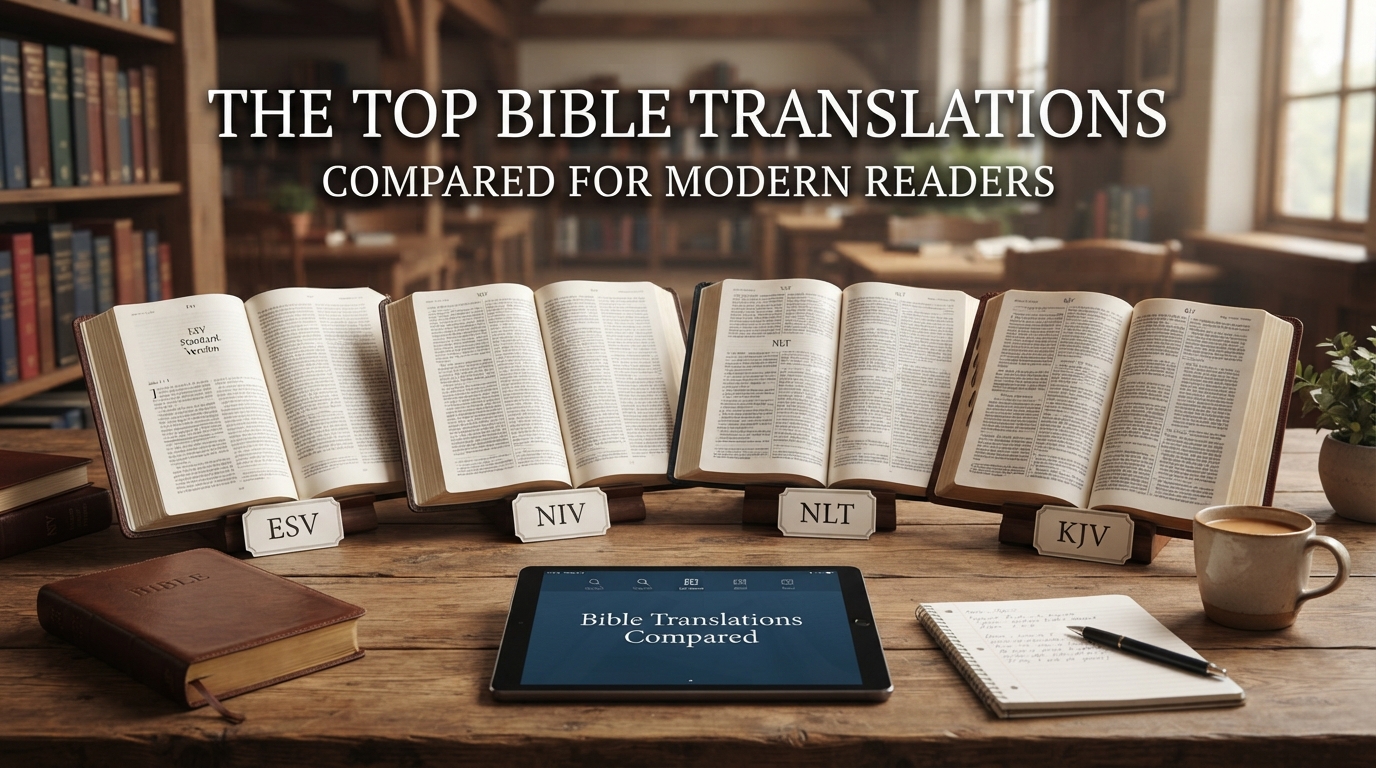
Choosing a Bible translation can feel overwhelming. With dozens of versions on the market, each claiming to be the most accurate or readable, where do you even start?
Maybe you grew up with the King James Version (KJV) but find the old English tough to follow. Or perhaps you’ve tried the NIV and wondered if it’s “too loose” with the original text. You’re not alone.
In this guide, we’ll break down the top Bible translations for modern readers. We’ll compare accuracy, readability, and the philosophy behind each version—so you can pick the one that fits your faith journey best. And if you’re looking for more tools to deepen your Bible study practice, we’ve got you covered.
Why Translation Philosophy Matters More Than You Think
Every Bible translation sits on a spectrum between “word-for-word” (formal equivalence) and “thought-for-thought” (functional equivalence). The first aims to mirror the original Greek, Hebrew, and Aramaic structure as closely as possible. The second prioritizes what the original authors meant to communicate in natural English.
Neither approach is “wrong.” They just serve different purposes. If you’re doing deep exegesis or theological study, you’ll want a formal translation. If you’re reading for devotion or trying to grasp the big picture quickly, a dynamic version might work better.
Understanding this difference is the first step in any Bible translation comparison. It helps you avoid frustration and get the most out of your reading time.
The Best Word-for-Word Translations for Accuracy Lovers
If you want to see exactly what Paul wrote to the Corinthians, a formal equivalence translation is your friend. These versions stay as close to the original syntax as English allows.
New American Standard Bible (NASB)
The NASB is often called the most literal modern English translation. It updates the American Standard Version of 1901 and consistently aims for precision—sometimes at the cost of smooth reading. The 2020 revision (NASB 2020) made it slightly more conversational while keeping its core accuracy. It’s a favorite among pastors and serious students who want to parse every verb tense.
English Standard Version (ESV)
The ESV strikes a smart balance. It follows the “essentially literal” philosophy, meaning it sticks close to the original while still sounding natural in modern English. Many churches today use the ESV for both pulpit reading and personal study. If you want a translation that feels authoritative without being archaic, the ESV is a solid pick.
King James Version (KJV)
Let’s be honest: the KJV is beautiful. Its poetic cadence has shaped English literature for centuries. But its 1611 English—thee, thou, hath, doth—can be a barrier for modern readers. Unless you’re already familiar with early modern English, this version may slow you down more than it helps. That said, if tradition matters to you, it’s still worth having on your shelf.
Best Thought-for-Thought Translations for Everyday Reading
These versions prioritize clarity and natural flow. They don’t care about matching the Greek word order—they care about making the meaning crystal clear.
New International Version (NIV)
The NIV is the best-selling modern translation in the world, and for good reason. It uses a mediating approach: mostly thought-for-thought but with respect for the original text. The 2011 update removed some gender-exclusive language where the original Greek allowed, which sparked debate, but the result is a Bible that reads smoothly and remains trustworthy. If you only buy one Bible, the NIV is the safe choice.
New Living Translation (NLT)
The NLT takes readability to the next level. It began as a revision of the Living Bible but transformed into a full translation from the original languages. It’s especially helpful for new believers, young readers, or anyone who finds traditional translations dense. You might lose some wordplay or structural nuance, but you’ll gain a clear understanding of what the passage actually says.
Christian Standard Bible (CSB)
The CSB is a relative newcomer (2017) that aims for “optimal equivalence.” That means it doesn’t commit fully to either side of the spectrum but adjusts based on the passage. It’s slightly more formal than the NIV but reads more naturally than the ESV. Many people describe it as a “Goldilocks” version—just right for both study and devotion.
Comparing Key Passages Across Translations
Let’s see how these versions handle the same verse. Take John 3:16:
- KJV: “For God so loved the world, that he gave his only begotten Son, that whosoever believeth in him should not perish, but have everlasting life.”
- NASB 2020: “For God so loved the world that He gave His only Son, so that everyone who believes in Him will not perish, but have eternal life.”
- ESV: “For God so loved the world, that he gave his only Son, that whoever believes in him should not perish but have eternal life.”
- NIV: “For God so loved the world that he gave his one and only Son, that whoever believes in him shall not perish but have eternal life.”
- NLT: “For God loved the world so much that he gave his one and only Son, so that everyone who believes in him will not perish but have eternal life.”
Notice the differences. The KJV says “only begotten,” while modern versions simply say “only” or “one and only”—a shift based on better manuscript evidence. The NLT rephrases “so loved” to “loved so much,” making the intensity more obvious. Each translation brings a slightly different shade of meaning.
How to Choose the Right Translation for Your Needs
There’s no single “best” Bible translation. The right one depends on what you’re doing with it. Here’s a quick guide:
| Your Goal | Recommended Translation |
|---|---|
| Deep theological study or exegesis | NASB 2020 or ESV |
| Daily devotional reading | NIV or NLT |
| Memorizing Scripture | ESV or CSB |
| Sharing with new believers or kids | NLT or CSB |
| Traditional worship and liturgy | KJV or ESV |
Many modern readers also find it helpful to use two translations side by side—one formal and one dynamic. Read the passage in the ESV for structure, then in the NLT to let the meaning sink in. This combination can transform your prayer and devotion time.
If you struggle with keeping focus during reading, consider pairing your Bible with a tool that supports mental clarity. Some readers report better comprehension when using audio Bibles or concentration aids—check out this option if you want to sharpen your focus before diving into Scripture. A clearer mind can help you absorb the Word more deeply.
Modern Bible Versions and Digital Reading Habits
Let’s be real: most of us read the Bible on our phones now. And not all translations handle digital formats equally. The NLT and NIV tend to shine on screens because their sentence structures are shorter. The NASB, with its longer, more complex sentences, can feel heavy on a small screen.
Also consider Christian living apps that offer multiple translations. Many allow you to tap a single verse and see it in five different versions instantly. This flexibility is priceless for quick comparisons without flipping physical pages. The key is consistency—pick a main translation and stick with it for at least a month before switching.
FAQ: Top Bible Translations Compared for Modern Readers
What is the most accurate Bible translation in English?
The NASB 2020 is widely considered the most literal modern translation. However, “accurate” can also mean “accurate in meaning,” which is where the NIV and NLT shine. It depends on whether you prioritize word-for-word precision or clear communication of the original intent.
Which Bible translation is easiest to read?
The NLT is the easiest for most modern readers. It uses simple, everyday vocabulary and short sentences. The CSB and NIV are also very readable without sacrificing scholarly integrity.
Is the King James Version still good for study?
Yes, but with a caveat. The KJV is based on the Textus Receptus, a Greek manuscript family that differs from the older manuscripts used by modern translations. Scholars today prefer the Nestle-Aland or UBS Greek texts. If you love the KJV, use it alongside a modern version to cross-check.
Can I use the NIV for serious Bible study?
Absolutely. The NIV is used by many seminaries and churches worldwide. It’s not as literal as the NASB, but its translation committee includes top evangelical scholars. For most people doing practical Bible study, the NIV is more than sufficient.
What’s the difference between the ESV and the NASB?
The NASB is more literal, even to the point of keeping Greek sentence structures that sound awkward in English. The ESV is also literal but smooths out some of those rough edges, making it easier to read aloud. The ESV also uses more gender-neutral language (like “people” instead of “men”) where the original text allows.
Should I buy a study Bible or just a plain text Bible?
If you’re new to in-depth Bible reading, a study Bible (like the ESV Study Bible or NIV Quest Study Bible) can be a game-changer. The notes explain cultural context, theological debates, and cross-references. For experienced readers, a wide-margin plain text Bible might be better for journaling and personal reflection.
Which translation do pastors recommend most?
Surveys show the NIV and ESV dominate in evangelical churches. The CSB is growing in popularity, especially among Southern Baptists. The KJV remains strong in charismatic and African American church traditions. There is no single “pastor’s choice”—it truly varies by denomination and region.
Conclusion: Start Reading, Stop Debating
The best Bible translation for modern readers is the one you’ll actually read consistently. Don’t get paralyzed by the choice. Pick a version from the table above, start with the Gospel of Mark, and see how it feels. You can always switch later.
Remember, no translation is perfect. Each one reflects the theological and textual choices of its translators. But God’s message transcends any single version. Whether you choose the poetic KJV, the precise NASB, or the clear NLT, you’re engaging with the Living Word.
For more resources on deepening your faith, visit our Faith and Inspiration section. And if you ever feel stuck in your Bible reading routine, remember: consistency beats intensity. Even ten minutes a day with your chosen translation will transform your spiritual life over time.