The Ultimate Beginner’s Guide to Bible Study
Starting a Bible study journey can feel overwhelming. You might wonder where to begin, what book to read first, or how to actually understand what you’re reading. If that sounds familiar, you are not alone. Many people open their Bibles with good intentions but close them a few minutes later, confused or frustrated.
This beginner’s guide to Bible study is designed to change that. Whether you are exploring faith for the first time or looking to build a consistent habit, these practical steps will help you engage with Scripture in a way that is simple, meaningful, and sustainable.
Why Bible Study Matters for Your Faith
The Bible is not just a history book or a collection of moral stories. Christians believe it is God’s living Word, meant to guide, comfort, and transform us. Spending time in Scripture helps you understand who God is, who you are, and how to navigate life’s challenges.
Regular Bible study also deepens your relationship with God. Just like any meaningful relationship requires conversation and listening, your faith grows when you make space to hear from Him through His Word. This discipline is foundational for prayer and devotion.
The goal is not to become a theologian overnight. It is simply to show up, read, and let the words sink in. Over time, those small moments add up to real spiritual growth.
Choosing the Right Bible Translation
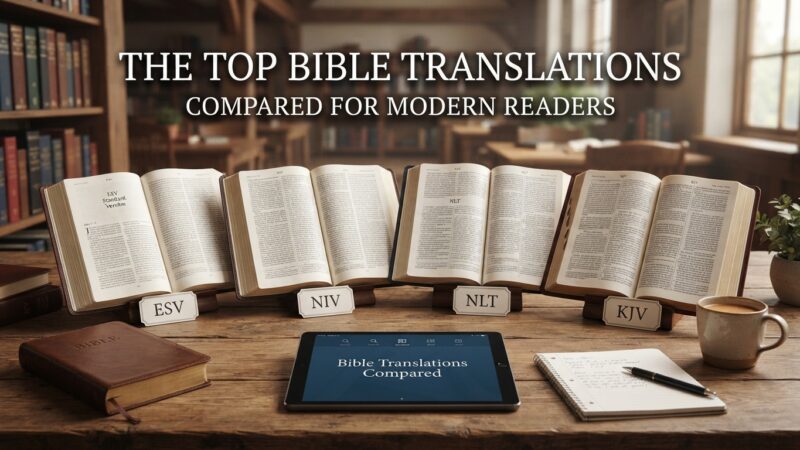
One of the first decisions you will make is which Bible translation to use. With so many options, it can be confusing. The good news is there is no single “right” choice. It depends on what you value most: accuracy to the original languages or readability in modern English.
Here is a quick breakdown of popular translations:
| Translation | Type | Best For |
|---|---|---|
| NIV (New International Version) | Balance of accuracy and readability | Daily reading and study |
| ESV (English Standard Version) | Word-for-word (formal equivalence) | In-depth study and teaching |
| NLT (New Living Translation) | Thought-for-thought (dynamic equivalence) | Devotional reading and beginners |
| KJV (King James Version) | Formal, archaic language | Traditional study and memorization |
| CSB (Christian Standard Bible) | Optimal equivalence | Modern study with good accuracy |
For a true beginner, I recommend starting with the NLT or NIV. They are clear and easy to follow. You can always compare passages in a more literal version like the ESV later. If you are interested in deeper topics, check out the resources in bible prophecy and end times for more context.
Simple Methods for How to Study the Bible
You do not need a seminary degree to study the Bible effectively. In fact, some of the best methods are refreshingly simple. The key is consistency, not complexity.
Try these three approaches as you develop your how to study the Bible routine:
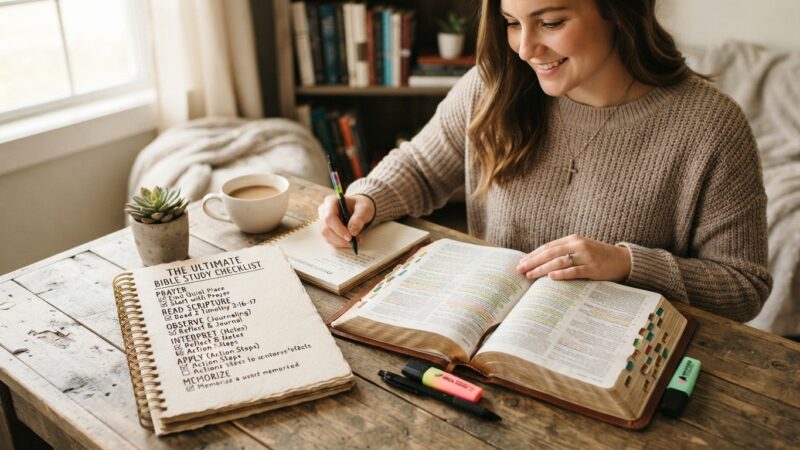
- The SOAP Method: Stands for Scripture, Observation, Application, Prayer. Read a short passage, write down what you notice, apply it to your life, and pray about it.
- Chapter Summary: Read one chapter. Write a one-sentence summary. Note one verse that stood out and why. This is excellent for a Bible reading plan for beginners.
- Inductive Study: Ask three questions: What does this passage say? What does it mean? How does it apply to me? This works great for book-by-book studies.
Whichever method you choose, the goal is engagement. Passive reading rarely leads to transformation. Active study where you write, reflect, and question will stick with you much longer.
Creating a Bible Reading Plan for Beginners
A plan removes the guesswork. Without one, you might jump around randomly or give up after a few days. A simple Bible reading plan for beginners gives you direction and momentum.
Start small. Do not try to read the entire Bible in a month. Aim for 5 to 10 minutes a day. Here is a realistic weekly plan to get started:
- Monday: Read one Psalm (try Psalm 23 or 91)
- Tuesday: Read one Proverb (Proverbs 3 is great)
- Wednesday: Read half a chapter from the Gospel of John
- Thursday: Read one Psalm
- Friday: Read another Proverb
- Weekend: Read one full chapter from Mark or Luke
This plan introduces you to different genres of Scripture: poetry (Psalms), wisdom (Proverbs), and narrative (Gospels). You will get a balanced diet without feeling overwhelmed. For more inspiration, explore resources in faith and inspiration.
Practical Tools to Enhance Your Scripture Study Tips
You do not need expensive equipment, but a few tools can make your Scripture study tips more effective. First, get a physical journal or a simple notebook. Writing by hand helps you retain more than typing.
Second, consider a study Bible. These editions include notes, maps, and cross-references right on the page. They explain historical context and difficult verses, which is invaluable when you are learning how to interpret the text.
Third, use a free online resource like BibleHub or Blue Letter Bible for original Greek and Hebrew word meanings. If you want to boost your focus and mental clarity while studying, confira esta opção that supports sharper cognitive function during your quiet time.
Staying Consistent Without Burning Out
Consistency is the hardest part for most beginners. Life gets busy, motivation fades, and you miss a day. Then guilt sets in, and you stop altogether. Here is the truth: missing one day does not ruin your journey. What matters is coming back.
Set a realistic time and place. Maybe it is with your morning coffee or right before bed. Keep your Bible and journal in that spot. Tie your study to an existing habit, like brushing your teeth, so it becomes automatic.
Remember, grace applies to your study habits too. If you only read one verse and pray for a minute, that is a win. Small steps repeated over months create lasting change. This is a core part of christian living that applies to every area of life.
Common Questions Beginners Ask (FAQ)
How long should I study the Bible each day?
Start with 5 to 10 minutes. Quality matters more than quantity. As you grow comfortable, you can increase to 15 or 20 minutes. The key is showing up consistently.
What book of the Bible should I start with?
Most beginners do well starting with the Gospel of John, the book of Mark, or the Psalms. They are accessible and focus on the life of Jesus and practical worship.
Do I need a study Bible or commentary?
Not at first. A simple Bible and notebook are enough. If you want extra help, a study Bible is a great investment, but it is not required to begin.
What if I don’t understand what I am reading?
That is completely normal. Write down your questions. Ask a trusted friend, pastor, or search a reliable resource online. The definition of faith itself involves trusting what we do not fully see. Growth comes from asking, not from knowing everything.
How do I apply what I read to my life?
After reading, ask: “Is there an example to follow, a command to obey, a sin to avoid, or a promise to claim?” This simple filter helps you move from information to transformation.
Should I read the Bible chronologically?
Chronological reading can be helpful for understanding the historical flow, but it can be challenging for beginners. Consider it after you have built a habit with the Gospels and Psalms.
Is it okay to skip parts of the Bible?
Every part of Scripture is valuable, but not every part is equally accessible at first. Feel free to focus on easier books initially and return to more complex books later.
Your Next Step in This Beginner’s Guide to Bible Study
You now have everything you need to start. A translation that fits you, a simple method, a realistic plan, and practical tools. The only thing missing is the first step. Open your Bible today, even for five minutes. Write one thought down. Pray one sentence.
This beginner’s guide to Bible study is just the beginning. The more you read, the more you will discover that the Bible is not a book to master, but a living Word to encounter. Let it shape your heart, renew your mind, and guide your steps. You have what it takes. Start now.