The Ultimate Bible Study Checklist for Christians

Have you ever sat down to read your Bible, only to close it five minutes later feeling distracted, confused, or just plain guilty because you didn’t “get” anything out of it? You are not alone. Many Christians want to study Scripture but don’t know where to start or what to focus on.
A strong, consistent devotional life doesn’t happen by accident. It requires intentionality, the right tools, and a clear framework. That is exactly why I created this Bible study checklist for Christians. Whether you are a brand-new believer or have been walking with the Lord for decades, this guide will help you turn scattered reading into deep, life-changing study.
Think of this checklist as your spiritual toolkit. It covers the essential steps before, during, and after your time in the Word. By the end of this article, you will have a repeatable system that makes Scripture come alive. Ready to dive in? Let’s unpack every item on the list.
Why You Need a Bible Study Checklist
Let’s be honest—life is busy. Between work, family, and endless notifications, it is easy to let our quiet time become rushed or forgotten entirely. A checklist removes the guesswork.
When you follow a consistent structure, you train your mind and spirit to focus. You move from passive reading to active engagement. Instead of asking “What does this passage mean to me?” you start asking “What does this passage say about God?” That shift changes everything.
Using a variety of Bible study methods also prevents monotony. No more feeling like you are reading the same verses over and over without fresh insight. A good checklist keeps your study time dynamic and anchored in truth.
Ultimately, this is not about checking boxes to feel spiritual. It is about creating rhythms that help you encounter the living God through His Word. Consistency beats intensity every time.
Step 1: Prepare Your Heart and Mind Before You Begin
Before you even open your Bible, pause. Take a deep breath. Ask the Holy Spirit to guide your understanding. Prayer is not just something you tack on at the end of your study—it is the foundation.
Confess any distractions or sin that might be weighing on your heart. Scripture is clear that unconfessed sin can block our spiritual hearing (Psalm 66:18). Spend just 30 seconds silently inviting God to speak.
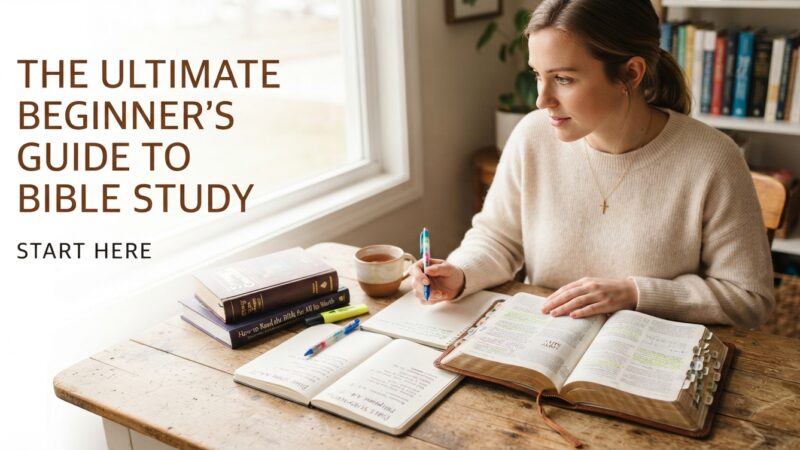
Set a specific time and place where you can focus. Morning works best for many, but evening is fine too. The key is consistency. Keep your Bible, journal, pen, and perhaps a commentary or study app close by so you don’t have to get up midway.
Finally, choose a translation you can understand. If you struggle with the King James Version, try the NIV, ESV, or CSB. The goal is comprehension, not tradition.
Step 2: Read the Passage Slowly and Repeatedly
Most Christians make a simple mistake: they read one chapter quickly and move on. That is skimming, not studying. To study the Bible effectively, you need to slow down.
Read the same passage at least three times. First, read for the general storyline. Second, read aloud—hearing the words helps retention. Third, read while looking for key repeated words, contrasts, or commands.
If the passage is a story, picture yourself in the scene. If it is a letter, ask what the original audience needed to hear. This simple habit turns abstract text into a living conversation.
For example, when I studied Psalm 23 recently, I noticed the phrase “He leads” appears multiple times. That repetition points to a central theme of God’s guidance. You catch these details only when you linger.
Step 3: Observe What the Text Actually Says
Observation answers the question: “What does the text say?” At this stage, you do not jump to interpretation or application. You simply gather facts.
- Who is speaking or writing? (Moses? Paul? The prophet Jeremiah?)
- What is the main event or argument?
- Where does this take place? (Geographical and cultural context matters.)
- When was this written relative to other biblical events?
- Why was this passage included in Scripture?
- How does the author make his point? (Poetry, narrative, prophecy, instruction?)
Write down your observations in a notebook. Even the small details—like a number, a name, or a specific location—can unlock deeper meaning later. This is the most crucial step for anyone wanting Christian Bible study tips that actually work.
Step 4: Interpret the Passage in Its Context
Interpretation answers: “What did this passage mean to the original audience?” This is where many well-meaning believers go wrong. They ask “What does this mean to me?” before understanding what it meant back then.
Consider the culture, history, and literary genre. A proverb is not a promise. A psalm is not a prophecy. A letter from Paul must be read within the context of the entire epistle.
Use a trusted Bible dictionary or a study Bible note to check confusing words or customs. For example, when Jesus talks about “mammon,” He is referring specifically to wealth personified as a false god. Knowing that changes how you read the passage.
Interpretation protects you from error. It keeps you from twisting Scripture to fit your personal preferences. Always ask: “What was the author’s intended meaning?”
Step 5: Apply the Truth to Your Life
Application is the bridge between the Bible and your daily walk. It answers the question: “So what? How does this change how I live today?” Without application, study becomes mere intellectual exercise.
Be specific. Instead of saying “I should love others more,” ask yourself: “Who is one person I have been avoiding, and what is one practical way I can show them love this week?”
Make application a three-part structure: Head (what do I now know?), Heart (what do I now feel or believe differently?), and Hands (what will I now do?). Write down your action step and revisit it next week.
If you need encouragement in living out your faith, browse the Christian living section for real-world examples of how others apply Scripture.
Step 6: Record Insights in a Journal
A journal turns your study into a treasure you can revisit. Write down the date, the passage, your observations, your interpretation, and your application. Over time, you will see patterns in how God speaks to you.
Don’t worry about writing perfectly. This is between you and the Lord. Bullet points, doodles, and messy handwriting are all fine. The act of writing cements the lesson in your memory far better than typing does.
Review your journal monthly. You will be amazed at how God has been working consistently in your life, even during seasons when you felt distant. It is a powerful testimony of His faithfulness.
For additional inspiration, check out our prayer and devotion resources to complement your journaling practice.
Practical Tools and Resources to Enhance Your Study
Technology can be a tremendous help. Apps like Blue Letter Bible, YouVersion, and Logos offer free commentaries, lexicons, and cross-references. Use them to dig deeper without getting overwhelmed.
Physical resources are valuable too. A good study Bible (like the ESV Study Bible or the NIV Application Commentary) provides context directly on the page. A concordance helps you trace key themes across the whole Bible.
If you find that your mind tends to wander during study, you might also benefit from tools that support sharper focus. Some readers report that background audio designed for cognitive clarity helps them stay on task. If that sounds helpful, confira esta opção for additional support during your quiet time.
Remember: no tool replaces the Holy Spirit’s guidance. Use resources as supplements, not substitutes.
Sample Bible Study Checklist Table
Here is a quick-reference table you can print or save to your phone. Use it every time you open your Bible until the steps become second nature.
| Stage | Action | Time Estimate |
|---|---|---|
| Prepare | Pray, confess sin, gather tools | 2 minutes |
| Read | Read passage slowly three times | 5–10 minutes |
| Observe | Answer who, what, where, when, why, how | 5 minutes |
| Interpret | Check context, culture, and genre | 5–10 minutes |
| Apply | Identify head, heart, and hands action | 5 minutes |
| Journal | Write date, passage, insights, and next step | 5 minutes |
Total time: about 30 minutes. That is a small investment for eternal returns.
How to Stay Motivated When Study Feels Dry
Let’s be real—some seasons of Bible study feel dry. You read the words, but nothing clicks. That is normal. Don’t panic and don’t quit.
First, check your heart. Are you rushing? Are you harboring unforgiveness? Sometimes dryness is a spiritual signal to pause and repent. Other times, God simply wants you to be faithful in the routine, even without emotional highs.
Switch up your method. If you always study a book of the Bible, try a thematic study on faith, prayer, or prophecy. If you always read alone, join a small group. Fresh approaches often reignite your love for Scripture.
For deeper insight into how Scripture speaks about the future, explore our Bible prophecy and end times category. Sometimes a change of topic is all you need.
Frequently Asked Questions (FAQ)
1. How long should my Bible study session be?
Aim for 20 to 30 minutes as a starting point. Consistency matters more than duration. A daily 15-minute study will transform your life more than a two-hour session once a month.
2. What is the best Bible translation for studying?
The ESV, NASB, and CSB are excellent for word-for-word accuracy. The NIV and NLT are great for readability. Choose a translation you actually understand and will read regularly.
3. Do I need to study the Bible in Greek or Hebrew?
No. Unless you have seminary training, focus on good English translations and study tools. Free interlinear Bibles and lexicons are available online if you want to check specific words.
4. How do I handle difficult or confusing passages?
First, don’t ignore them. Write down your question. Then, look at the immediate context and cross-reference similar passages. Consult a trusted commentary or ask a mature Christian. It is okay to say “I don’t know yet.”
5. Can I use this checklist for group Bible study too?
Absolutely. The same structure works beautifully in small groups. Have each member complete the observation step individually, then discuss your findings together before moving to interpretation and application.
6. What if I miss a day? Should I catch up?
No. Never try to “catch up” by reading multiple chapters. This leads to burnout. Just pick up where you left off the next day. Grace covers our missed days.
7. How do I know if I am applying Scripture correctly?
True application always aligns with the character of God and the broader teaching of Scripture. If your application leads to pride, harshness, or isolation, double-check it. Good application produces love, humility, and obedience.
8. What is the role of the Holy Spirit in Bible study?
The Holy Spirit is your primary teacher. He illuminates the text and convicts your heart. Always begin your study by asking Him to teach you. He will never contradict the Word He inspired.
Conclusion
Studying the Bible does not need to feel overwhelming. With the right Bible study checklist for Christians, you can approach Scripture confidently and consistently. You now have a practical, step-by-step system that moves you from passive reading to active transformation.
Remember: the goal is not information, but intimacy. God wants you to know Him, not just know about Him. As you apply these steps, you will discover that the Bible is alive, active, and speaking directly into your circumstances.
Start today. Pick one passage, grab your journal, and work through the checklist. Do not wait for the “perfect” moment. The greatest spiritual growth happens in the small, faithful steps you take every single day.
For more resources to deepen your walk, visit our faith and inspiration section. May your time in the Word be rich, rewarding, and deeply rooted in the love of Christ.